
What Fervo Energy’s First Results Post-IPO Actually Tell us about Utah's Energy Ecosystem
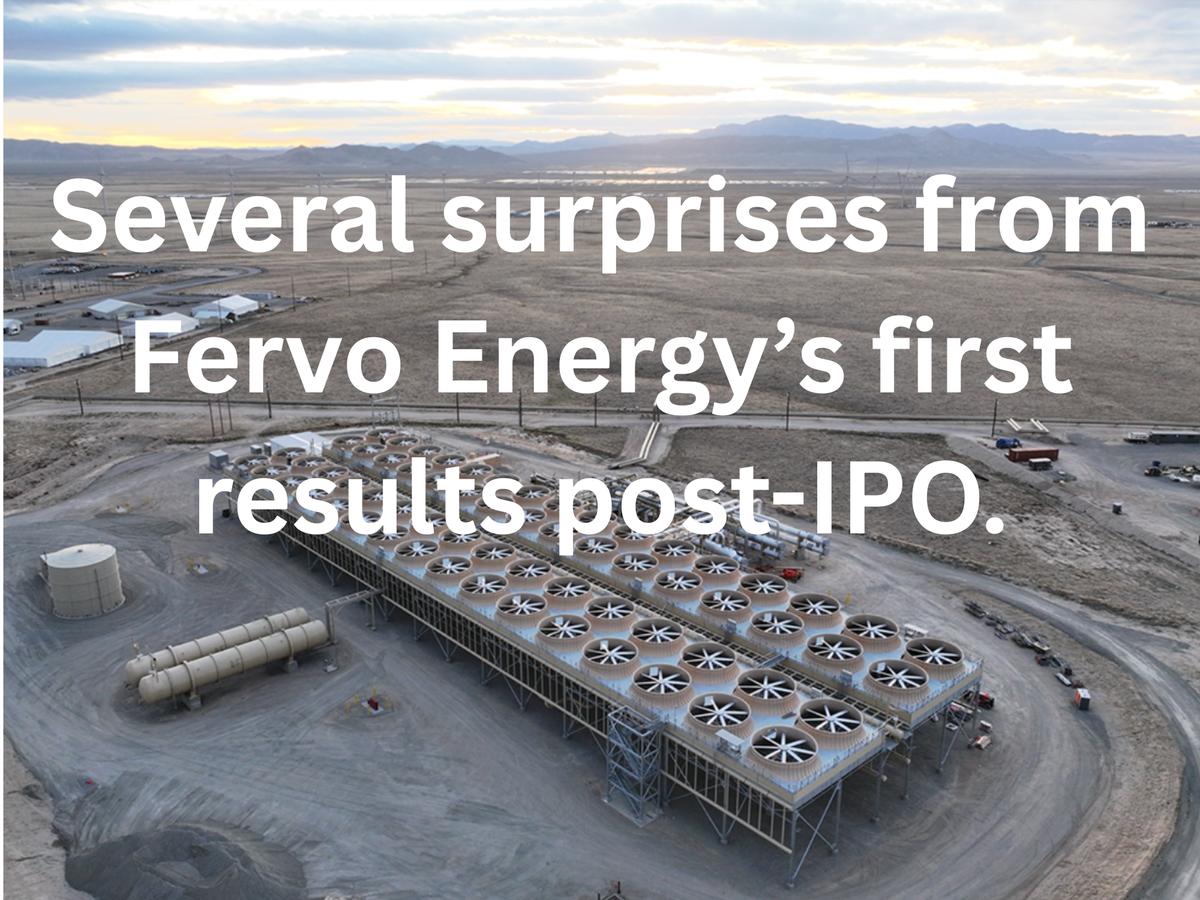
EXECUTIVE SUMMARY:
✅ Although Fervo Energy only reported $61,000 of first-quarter revenue, the larger Utah story includes
— $2.2 billion of IPO proceeds,
— $421.4 million of new project financing, and
— Roughly $1.2 billion of expected near-term CapEx tied largely to its Utah-based Cape Station project.
✅ Additionally, Fervo announced it had discovered its "hottest well in its history" (in Utah, no less), ~10 miles northeast of Cape Station.
✅ Fervo also signed a seven-year agreement with Google to provide it with up to 3 gigawatts of geothermal power through 2033.
24 June 2026 — BEAVER COUNTY, Utah and HOUSTON — The real news in Fervo Energy’s first quarterly report as a publicly traded company was not its Q1 2026 revenue, because those totals were minuscule, as expected.
Rather, the real news was that public-market capital, global project-finance lenders, hyperscaler electricity demand, and Utah geothermal infrastructure are now converging in Beaver County, Utah.
That's a much bigger story.
As noted in Fervo Energy’s first quarter 2026 earnings release, ended 31 March 2026 (NASDAQ:FRVO), the Houston, Texas-based company completed its initial public offering on the Nasdaq Stock Market on 14 May 2026, issuing 80.5 million shares of Class A common stock at $27.00 per share and raising approximately $2.2 billion in gross proceeds.
The company also said it closed $421.4 million of non-recourse project financing for Cape Station Phase I during the quarter.
It also reported that it expects to spend roughly $1.2 billion in Capital Expenditure (CapEx) from the second quarter of 2026 through the first quarter of 2027, primarily allocated to Cape Station Phase I, Cape Station Phase II, and other Fervo GeoClusters.
That's the Utah money stack.
In other words, for Utah Money Watch readers, this was not merely an earnings release.
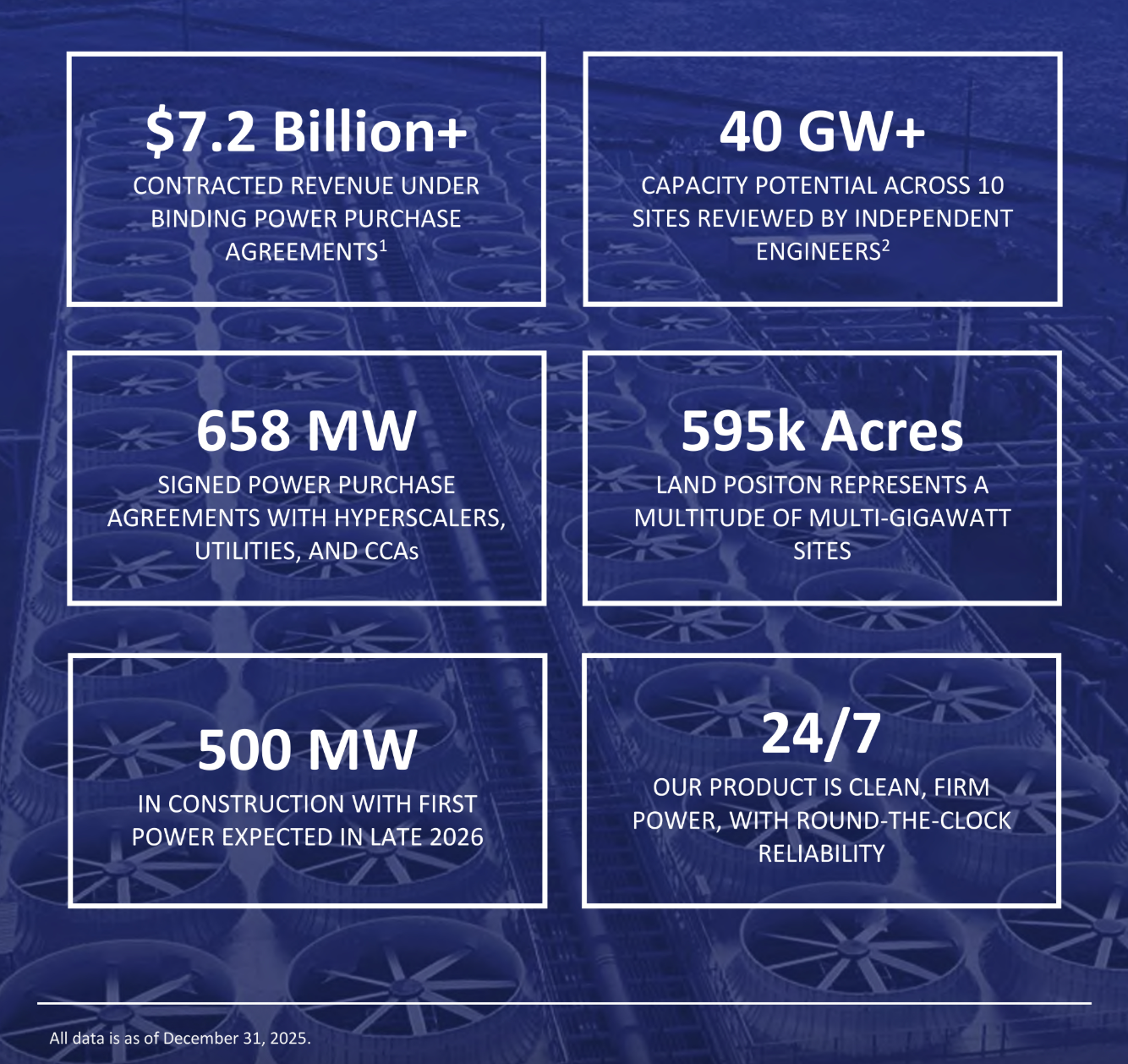
It stands a public-company progress report on whether enhanced geothermal systems can move from venture-backed energy technology into lender-financed, public-market infrastructure — especially here in Utah — because Utah is where much of that test is now happening.
{AUTHOR'S NOTE: To be clear, I understand that Fervo is NOT headquartered in Utah, no more than Northrop Grumman is HQ'd here. But Fervo's impact on the state's energy ecosystem is growing by the day. Hence, Utah Money Watch will continue to track and report on both firms as appropriate.}
The Cape Station Story
In September 2023, Fervo announced it had broken ground "... on the world’s largest next-gen geothermal project."
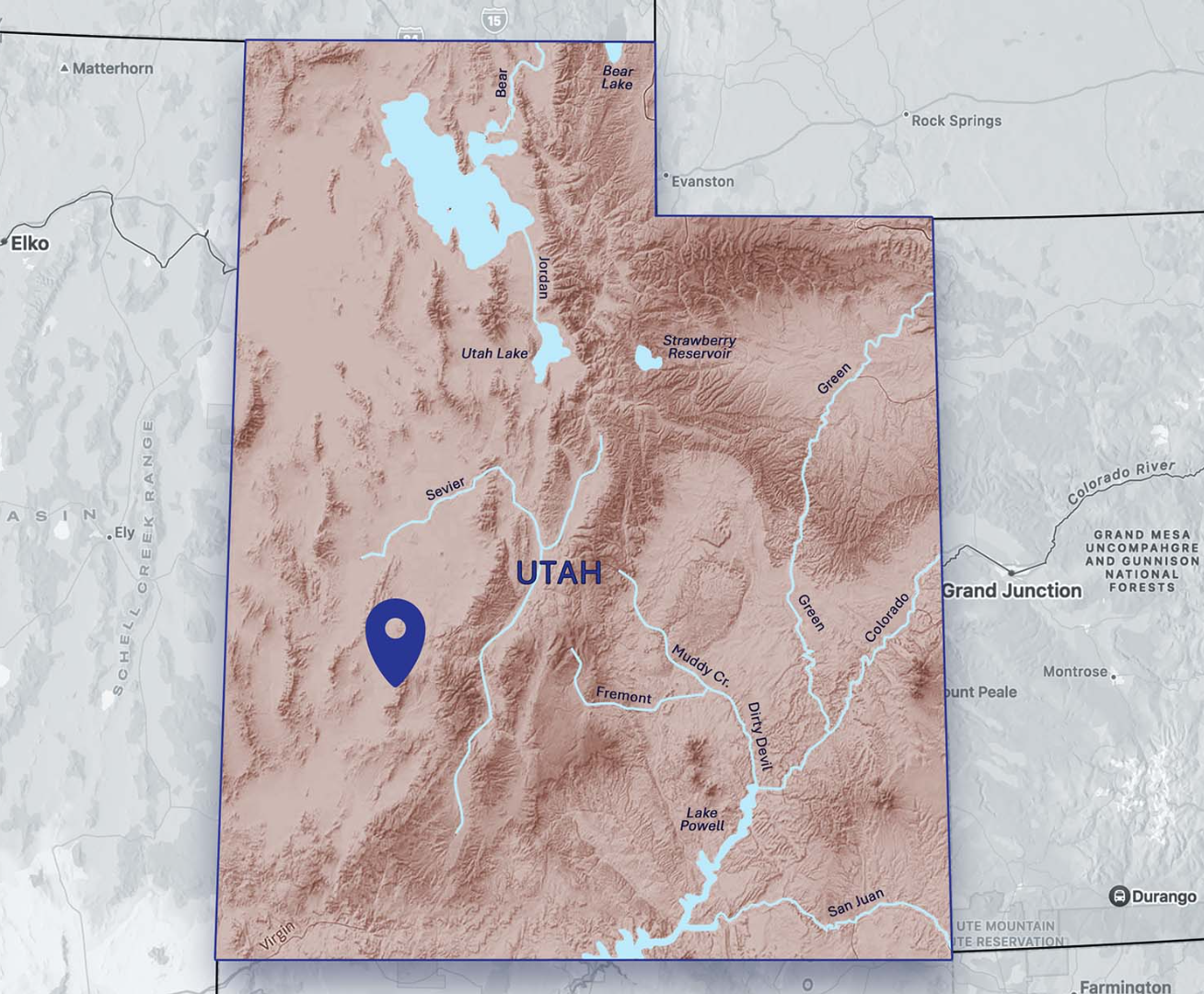
Located in Utah's Beaver County, that project (named Cape Station), was described by the company as being ideally situated because
"Utah is home to immense geothermal potential. Researchers estimate that the southwest portion of the state contains more than 10 GW of high-quality geothermal reserves."
As Fervo CEO and Co-Founder, Tim Latimer stated at the time:
"Beaver County, Utah is the perfect place to deploy our next-generation geothermal technology.... Thanks to cutting edge research and data collection (in the region), Fervo can accelerate the production of the region’s geothermal resources.”
Much has been accomplished by Fervo in the ensuing two-plus years, at Cape Station and beyond.
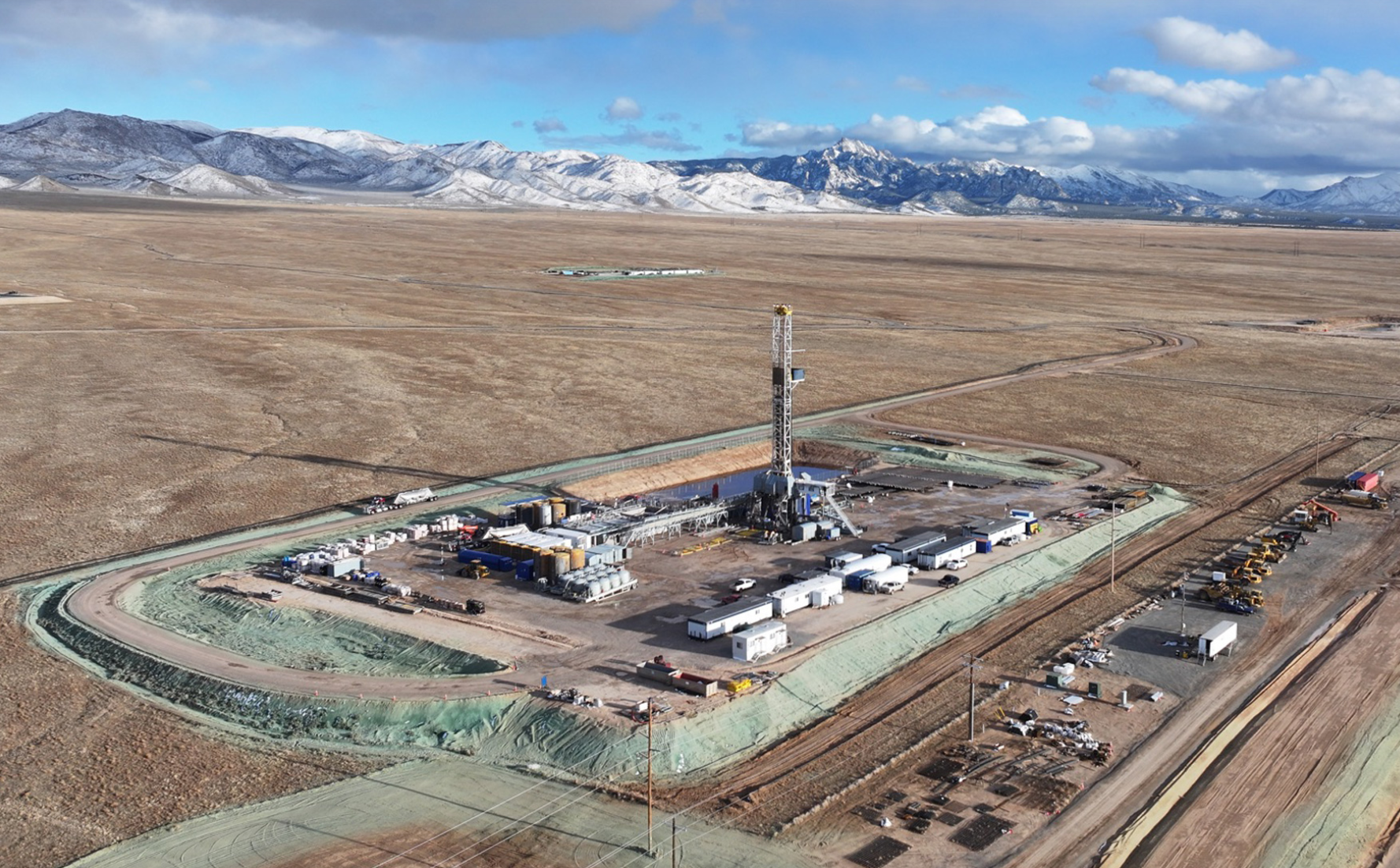
But for its part, Phase I of Cape Station is expected to deliver approximately 100 megawatts in 2026 through the Phase I location alone, with expectations of scaling that production to upwards of 500MW in the near future.
Fervo also said in its Q1 2026 results that
▪️ Commissioning was underway for GeoBlock Unit 1, with
▪️ Commercial operation planned for the fourth quarter of 2026, and
▪️ GeoBlock Units 2 and 3 expected to follow in the first quarter of 2027.
Additionally, Cape Station Phase II is no longer just a future development concept as Fervo disclosed in its Q1 2026 results that construction of Cape Station Phase II began during the first quarter.
That expansion into Cape Station Phase II is expected to deliver approximately 400MW, with commercial operation targeted for 2028, with
🔺 Long-lead equipment secured,
🔺 Initial Phase II wells drilled, and
🔺 Power-generation facility work underway.
In plain English, Fervo Energy is not simply raising money around Utah geothermal opportunities.
It is spending into it and drilling into it, proving such efforts are bankable.
Moving Beyond Fervo's IPO Monies
As important as Fervo's Initial Public Offering may have been to the firm, its investors, and the state of Utah, the project-finance piece may be the most important monetary-signal to glean from the Q1 2026 results filing.
For example, Fervo announced in March 2026 a $421.4 million non-recourse financing for Cape Station Phase I, funding led by Barclays, BBVA, HSBC, MUFG, and Société Générale, with RBC, J.P. Morgan, and Sumitomo Mitsui Trust Bank also participating, information restated in the Q1 2026 report.
The company said it believes the financing represents the first non-recourse project financing for an enhanced geothermal systems project globally, structured on terms similar to conventional power, renewable energy, and infrastructure project finance.
Translation:
This is where Utah's geothermal story stops being merely interesting and starts being judged as 24X7X365 energy infrastructure.
If accurate, that's important because infrastructure attracts lenders. It must in order to
✅ Support long-term contracts,
✅ Be built on time, and
✅ Consistently produce.
In other words, it has to work.
Always.
And when it does, it's bankable.
That said, the first quarter numbers were not pretty. Then again, Fervo Energy is not a mature operating company, even if it got its start in 2017.
In total, Fervo reported $61,000 of revenue, an operating loss of $20.1 million, and a net loss of $31.8 million.
But if revenue is where investors put their focus, they'll be using the wrong lens.
Specifically, when judged as an infrastructure company converting newly raised capital into physical energy assets, the quarter looks different.
Capital expenditures were $172.8 million in the first quarter of 2026, up from $105.4 million in the first quarter of 2025.
And the company’s expected $1.2 billion of CapEx over the next four quarters points to a buildout that is becoming very real, very quickly.
In the energy/power world, the demand side matters. A lot.
Other Nuggets in the Q1 Results Announcement
Fervo Energy also disclosed in its Q1 2026 results that in March 2026 it executed a geothermal framework agreement with Google to support development of up to 3GW of geothermal capacity through 2033, including 1GW of proposed projects in the first two years.
That links Beaver County, Utah, to one of the biggest energy stories facing America today, namely, how
— Artificial intelligence,
— Cloud computing, and
— Hyperscale data centers
will secure large amounts of clean, firm, and around-the-clock power.
True, solar and wind may have changed the electricity market, but data centers do not run only when the sun shines or the wind blows.
Conversely, once geothermal implementations are proven and deployed, they work all the time.
Period.
The release also added another Utah resource-validation item as Fervo said its Cottonwood observation well at Blanford, Utah (north of Cape Station), reached 555°F at 11,200 feet.
According to the company, Cottonwood is the hottest well in its history.
So the message from the first public-company quarter for Fervo Energy is not profitability.
Not yet, at least.
Instead, it's a capital-deployment story.
More specifically, it's a Utah-focused, capital-deployment story, one interwoven with
🔹 Public markets,
🔹 Global lenders,
🔹 Hyperscaler power demand,
🔹 Geothermal resource quality, and
🔹 The attempted conversion of enhanced geothermal systems into bankable infrastructure.
For Utah, the question is no longer whether next-generation geothermal sounds interesting.
The question is whether Beaver County becomes an American inflection point, one where geothermal power becomes financeable infrastructure at scale.
Publisher's Note
This writeup was originally published and distributed to our Subscribers at approximately 11:05am MT on Wednesday, 8 July 2026.
However, if this report/article came to your attention sometime after this date/time and you'd like to change that, then (to become a subscriber), please
1. Click on a "Subscribe" button on any Utah Money Watch webpage (visit www.UtahMoneyWatch.com),
2. Enter in your name in the proper field in the popup window that appears on-screen, and
3. Enter your preferred email address in the proper field too.
That's it. Thanks.
Team Utah Money Watch
Comments ()