
Utah’s Weave Agrees to $650 Million Sale to Francisco Partners, Five Months After Activist Investors Won Two Seats on Weave's Board of Directors
EXECUTIVE SUMMARY
✅ Lehi-based Weave Communications has agreed to be acquired by Francisco Partners for approximately $650 million, or $7.40 per share in cash, a 34% premium to WEAV’s 17 August closing price.
✅ The $7.40 exit price is still 69.17% below Weave's opening price of $24.00 the day of its 11 November 2021 IPO, even as Q2 2026 revenue rose 15.5% to $67.5 million and free cash flow reached $8.7 million.
✅ The announced sale comes less than five months after Engine Capital Management and 2717 Partners won two board seats and helped establish a "Finance Committee" focused on shareholder value. WEAV was $4.37 immediately before that agreement; Francisco’s offer is 69% higher.
✅ Francisco Partners already owns South Jordan, Utah-based AdvancedMD, acquired for $1.125 billion in 2024. The two Utah HealthTech software firms serve adjacent private-practice workflows, and AdvancedMD is already an authorized Weave integration.
19 August 2026 — LEHI, Utah — Nearly five years after selling shares to public investors for $24 apiece, Weave Communications (NYSE:WEAV) has agreed to become a private company again.
According to the Weave announcement, San Francisco, California-based Francisco Partners will acquire the Lehi-based healthcare-software company for an aggregate equity value of approximately $650 million, paying $7.40 per share in cash.
That's a 34% premium to WEAV’s $5.53 closing price on 17 August, the last full trading day before the deal was announced.
The transaction is expected to close during the fourth quarter of 2026, subject to shareholder and regulatory approvals.
As explained below, the reason this deal has been made (pending shareholder approval), is due in great part because of the two men shown in the composite photo below:
- Ryan Dubin of Engine Capital Management, and
- H. Edward Robson II of 2717 Partners.
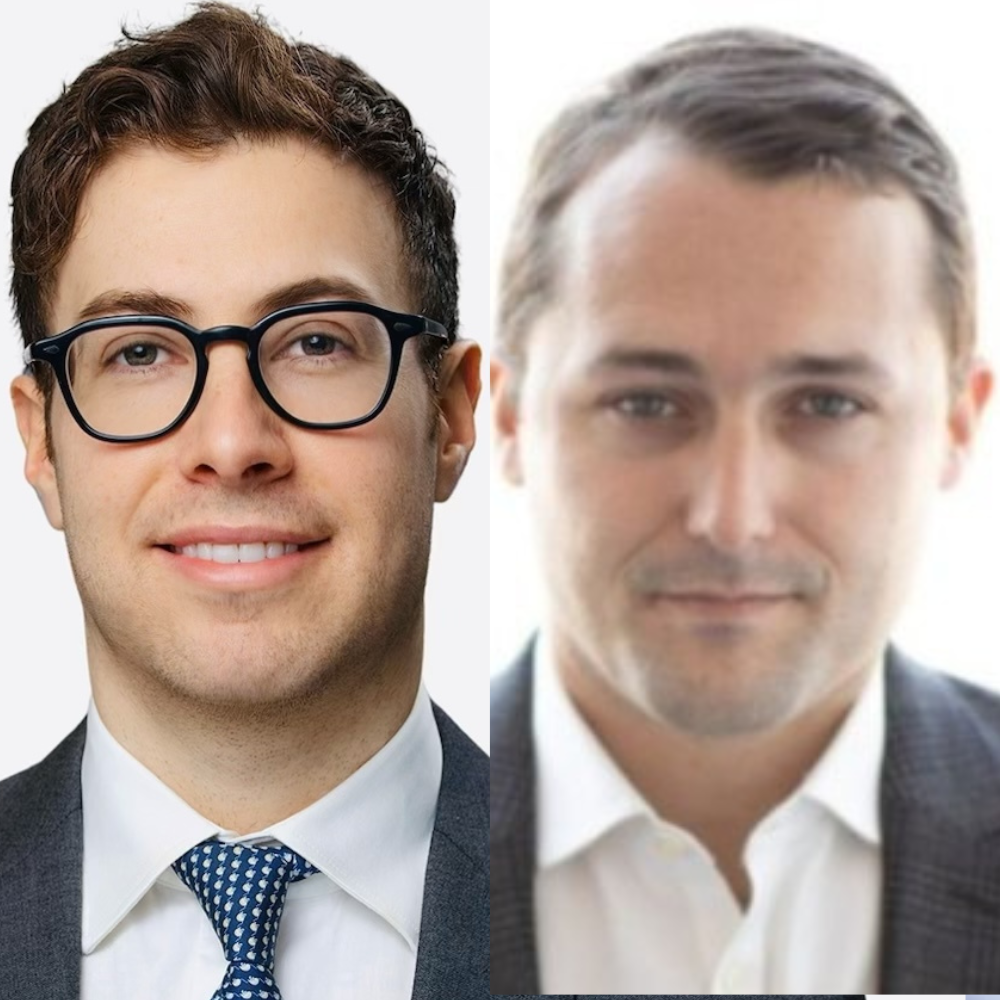
{See below for more details.}
After closing, however, Weave will no longer trade on the New York Stock Exchange, but says it will retain its name and Lehi headquarters.
These details notwithstanding, there is an important money distinction here:
💰 This is not $650 million flowing into Weave to fund growth; rather,
💰 This is principally a shareholder-liquidity event.
Specifically, Francisco Partners is buying the equity of the company, with Weave shareholders receiving $7.40 in cash for each common share they surrender.
That's the formal press announcement, but the more revealing story sits inside four different Weave share prices.
Four Stock Prices Tell the Story
- $24.00: Weave’s November 2021 IPO price (as shown in its final Prospectus).
- $4.37: WEAV’s closing price on Friday, 27 March 2026, the last day of trading before the activist-investor cooperation agreement was announced the next Monday.
- $5.53: WEAV’s closing price on 17 August 2026, immediately before the acquisition announcement.
- $7.40: Francisco Partners’ proposed purchase price.
Start with $24.
Weave sold 5 million shares in its IPO at $24 each, raising $120 million in gross proceeds in November 2021.
However, a shareholder who bought one share at the Initial Public Offering price and still owns it would receive $7.40 if the Francisco deal closes.
That's a decline of $16.60 per share, or approximately 69%.
So yes, Tuesday’s offer gives shareholders a meaningful 34% premium to the company’s pre-announcement market price.
But it also crystallizes a nearly 70% loss for an IPO investor who bought at $24 and never sold.
Both numbers are true, and both are critical contextual aspects of this story.
Weave was NOT in Trouble, Financially. So this Proposed Deal Is NOT a Rescue Transaction
The timing of this proposed acquisition is also noteworthy because Francisco Partners is not buying an obviously distressed company.
As noted in Weave's second quarter 2026 results (ended 30 June 2026) and announced just 12 days before the acquisition announcement, Weave reported:
🔺 $67.5 million in Q2 revenue, up 15.5% on a Year-over-Year basis, plus
🔺 $3.2 million in non-GAAP operating income,
🔺 $8.7 million in free cash flow, and
🔺 72.6% non-GAAP gross margin.
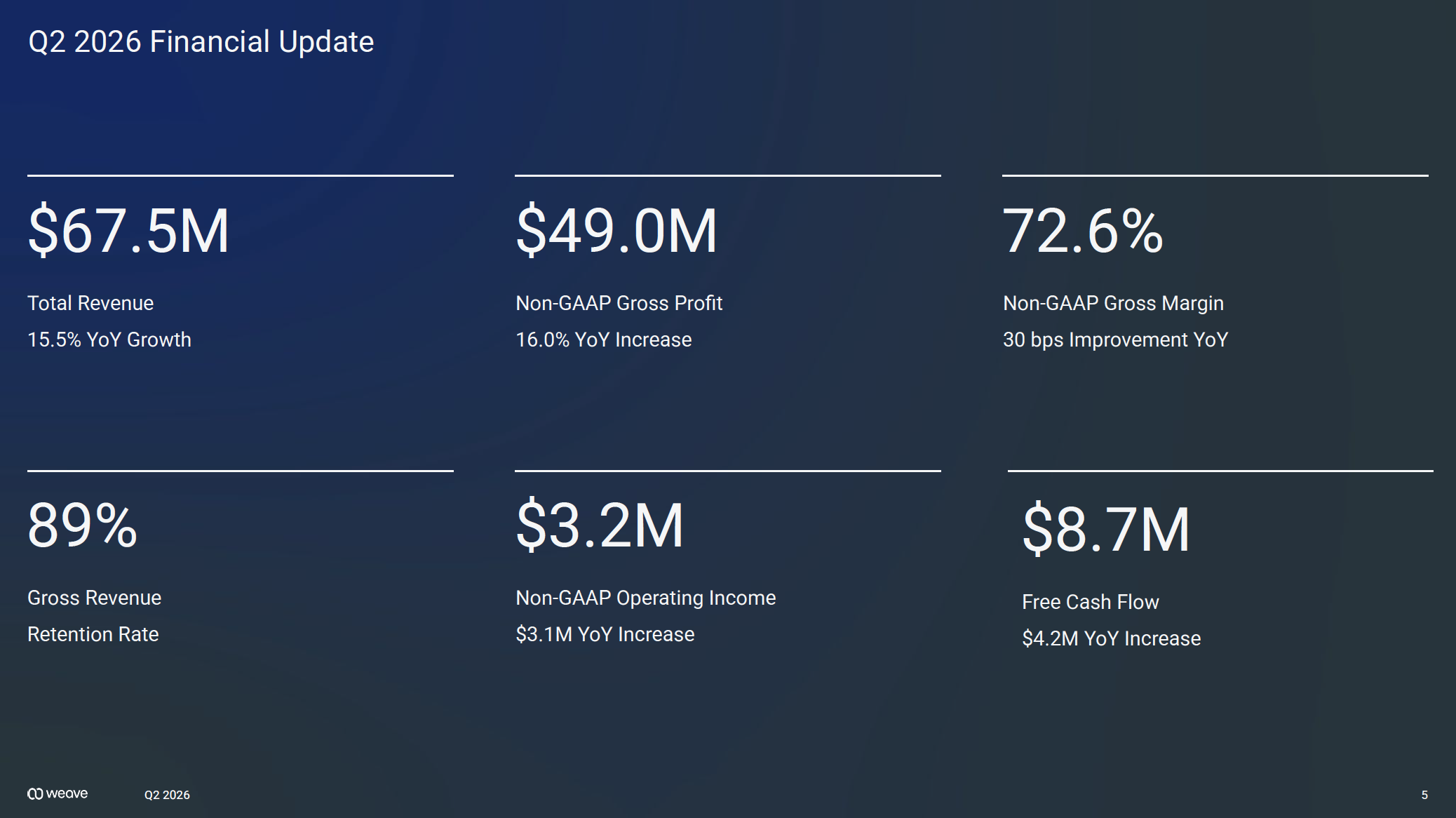
The company still recorded a $4.3 million net loss on a GAAP basis (Generally Accepted Accounting Principles), something not unexpected, so profitability clearly remains a work in progress.
But the financial direction of the company has changed considerably since its IPO in November 2021.
Weave also ended Q2 2026 with $47.6 million in cash and cash equivalents and $30.8 million in short-term investments, or roughly $78.4 million combined.
Management said those resources, plus amounts available under its secured credit facility, should be sufficient to cover working-capital and capital-expenditure needs for at least the next 12 months.
Based upon the midpoint of Weave’s 2026 revenue guidance of ~$273MM–$275MM, Francisco’s offer of $650 million works out to roughly 2.4 times projected annual revenue.
But that 2.4X projected revs brings us back to February 2026.
The Activists. The Board Seats. The Money.
As disclosed by Weave on 28 March 2026, it was contacted confidentially (just over five weeks earlier) by two value-oriented, activist hedge funds (located, respectively, on opposite sides of the United States), both of which specialize in mid-market public equities:
▪️ Engine Capital (out of New York City), and
▪️ 2717 Partners (out of San Francisco).
Why?
Because they intended to nominate three candidates for election to the Weave Board of Directors, and that threatened a proxy fight.
But it never reached a shareholder vote.
Instead, the parties signed a cooperation agreement and Weave expanded its board by two seats with
🔹 Ryan Dubin of Engine Capital, and
🔹 H. Edward Robson II of 2717 Partners
named as new directors. {See above.}
Weave also agreed to search for another independent director.
It also created something that proved to be quite consequential:
A four-member "Finance Committee" charged with helping the board drive long-term shareholder value.
The agreement gave the Finance Committee authority to hire its own
✅ Lawyers,
✅ Consultants and
✅ Other advisors (at Weave’s expense). Plus,
✅ The agreement required this Finance Committee to meet with management at least monthly.
The activists also had real money at stake.
At signing (March 28th), Engine Capital and 2717 Partners owned/controlled 3,152,525 common shares of Weave stock; the day before the agreement was finalized (Friday, March 27th), Weave shares closed at $4.37.
If that 3.15 million-share position has remained unchanged, it was worth approximately $13.8 million at that closing price.
At Francisco’s proposed $7.40 purchase price, the same block would be worth approximately $23.3 million. The difference: ~$9.6 million.
That is not, necessarily, the activists’ actual investment return because it's impossible to know today how much they actually paid for those 3.15 million shares (aka, their Cost Basis).
In addition, their holdings may have changed.
The bottom line?
Less than five months after that cooperation agreement was announced, Weave announced that its board had evaluated strategic alternatives, spoken with multiple strategic and financial parties, and chosen to sell the company.
QUESTIONS:
🟥 Did the investor activists challenge trigger the sale process?
🟥 Did the Finance Committee drive it?
🟥 Was a sale already under consideration before February?
We do not know yet.
Such questions are not trivial, but we will find out. (Keep reading.)
What Francisco Partners is Buying
Francisco Partners' motivation may prove easier to understand, however.
According to Weave's Q2 2026 investor presentation (dated 6 August 2026), over 40,000 customer locations now use the company's services for
🟣 Communications,
🟣 Scheduling,
🟣 Patient engagement,
🟣 Insurance verification,
🟣 Digital payments, and
🟣 Collections efforts.
Its latest investor presentation also highlights three especially relevant assets:
- More than 150 authorized integrations;
- 50–plus–percent of customer locations using at least one embedded AI solution from Weave; and
- Over one billion interactions driven by Weave apps accumulated across the platform.
Clearly, not nothing.
Additionally, nearly $64.6 million of Weave’s $67.5 million in Q2 2026 revenue came from subscription and payment-processing revenue, roughly 96% of the total.
That helps explain the private-equity thesis as Weave has:
🔹 Recurring revenue,
🔹 Improving economics,
🔹 Healthcare workflow data,
🔹 Payments, and
🔹 An expanding AI layer.
Also ... Francisco Partners Knows Utah
There's also a Utah connection that should not be overplayed, per se, but it may (emphasis on "may") prove consequential.
As it turns out, Francisco Partners already owns South Jordan, Utah-based AdvancedMD; bought it the first time in 2008.
Three years later, Francisco sold it to ADP in 2011. Then ...
🟢 ADP sold AdvancedMD to Marlin Equity Partners in 2015;
🟢 Marlin Equity Partners sold AdvancedMD to Global Payments for $700 million in 2018; and then, in a virtuous circle kind of way,
🟢 Global Payments sold AdvancedMD to Francisco Partners for $1.13 billion in 2024.
{For the Record: AdvancedMD was a public relations client of mine over 20 years ago.}
And AdvancedMD? It's a healthcare-software company focused on independent medical practices.
Interestingly enough (as noted on the AdvancedMD website), AdvancedMD is already an authorized Weave integration, syncing patient and appointment information into the platform.
Nothing disclosed Tuesday says the two companies will be combined, and there is no basis today to claim they will be.
But if the acquisition closes, Francisco Partners will control two Utah-headquartered HealthTech companies serving overlapping independent-practice markets from adjacent points in the workflow.
AUTHOR'S COMMENTARY:
And if you asked me (and essentially, that's why you read Utah Money Watch, right), I will not be shocked at all to learn that the overlap between the two companies is actually quite high, like greater than a 25% overlap.
AND ... if that's true, I would not be surprised to see a future merger of Weave into AdvancedMD either, for a ton of reasons.
Clearly, this will be worth paying attention to ... AFTER the acquisition is approved, presuming that it is.
Next Comes the Proxy Statement
The next important thing to watch for is a pending document filing, one that should be more revealing than Tuesday’s announcement.
Weave says it will file a Proxy Statement with the U.S. Securities and Exchange Commission ahead of a special shareholder meeting on the transaction.
In plain English, that Proxy Statement should explain to shareholders how the deal came together and why the board concluded they should vote for it.
Because this is a merger vote, Weave says preliminary and definitive Proxy materials will be filed with the SEC under Schedule 14A.
The preliminary merger Proxy filing would ordinarily appear under the SEC filing type PREM14A, followed by the definitive merger Proxy as DEFM14A.
Tuesday’s acquisition communication was filed as DEFA14A, additional proxy-solicitation material.
When filed, the Proxy should help answer:
- When did the strategic-alternatives process begin?
- Who first raised the possibility of a sale?
- What role did the activist-appointed directors and Finance Committee play?
- How many potential buyers were contacted, and how many submitted credible offers?
- Did Francisco Partners raise its bid?
- What financial projections did management provide?
- How did Jefferies value Weave in its fairness analysis?
- What termination fee and competing-bid restrictions apply?
- What do directors and executives receive if the deal closes?
Until then, we know a few things for sure.
✔️ The Weave common share price dropped from $24 to $7.40, down roughly 69% from the IPO.
✔️ $4.37 to $7.40: That's the per share price valuation increase (up roughly 69%) since immediately before the activist agreement until the acquisition was announced.
✔️ $5.53 to $7.40: $5.53 was the share price the day before the acquisition was announced; the next day (the day the acquisition was announced), Weave's share price closed at $7.28, a 31.65% price bump in under 24 hours.
Same company with three different shareholder stories.
Should this Deal Happen?
To me, this is one of those "No-Brainer Announcements" and proposed transactions.
Within days of Weave's IPO (11 November 2021), its stock closed at an all-time high of $21.13 per share.
Just over 7.5 months later, Weave shareholders who had bought and sold experienced a precipitous 85.69% drop on 30 June 2022, a painful paper-loss haircut when the Weave stock price closed at $3.04/share, .
OUCH!!!
However, had you bought Weave stock at $3.04 then held, you could have seen a nearly 6X return up to a market closing price on Valentine's Day, 2025, of $17.63/share.
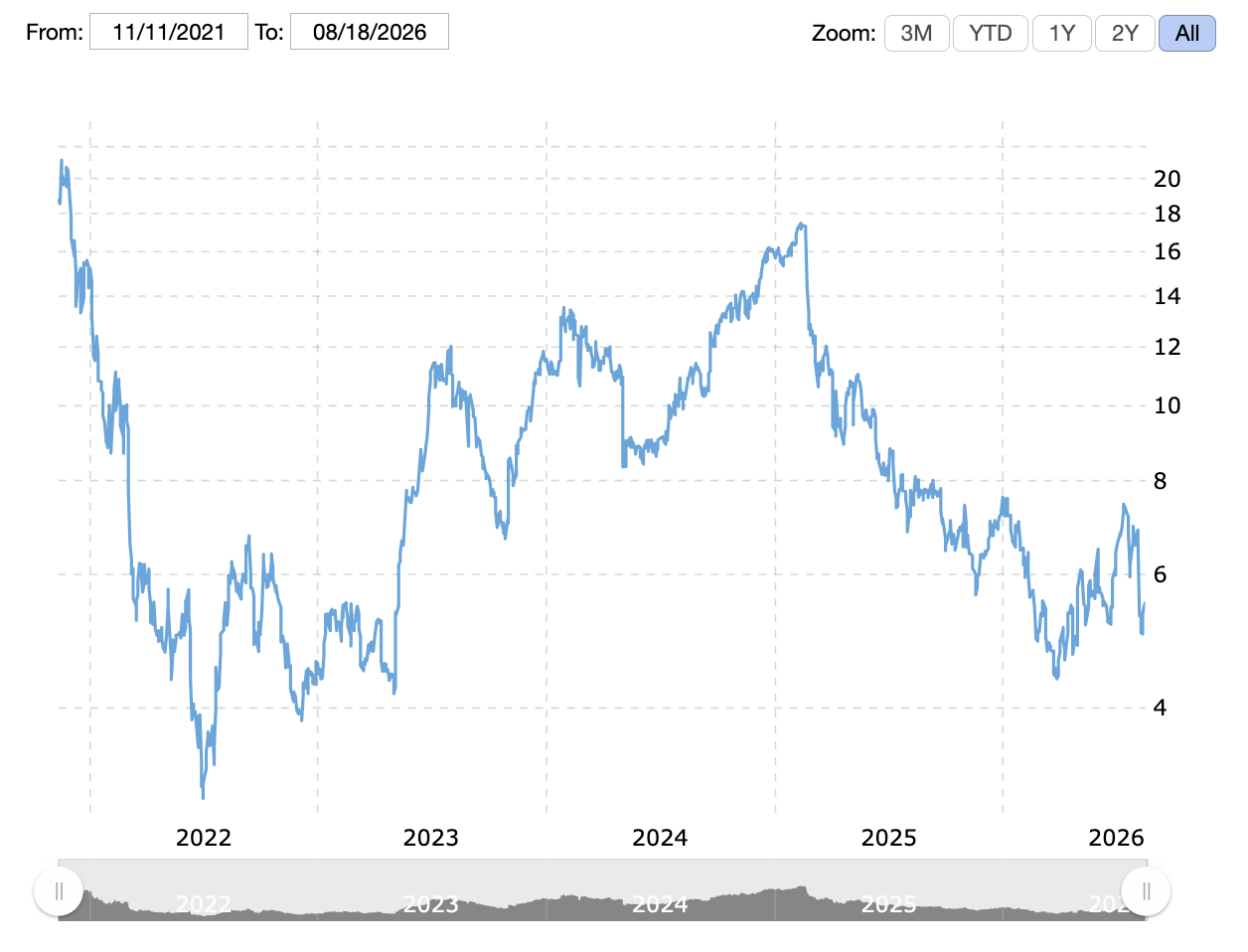
Unfortunately, of late, Weave's share price has seen a steady decline since then until it bottomed at a closing price of $4.37/share on 27 March 2026, yes, the last day of trading before the company announced its agreement with Engine Capital and 2717 Partners.
And yet, Weave's seeing progress as it now has over 40,000 subscriber clients on board.
But clearly the activists saw stock underperformance, at least on a per share basis, especially after that valuation run-up of just over 31 months from March 2022 to June 2025.
So what happened? Why the price decline?
I have no idea.
HOWEVER ...
IF there is a greater than a 25% overlap between AdvancedMD and Weave clients, then it would be essentially criminal for the two firms to not be merged into one entity.
That's just me, I know.
But that's my crystal ball approach to this news.
So for now, we wait.
Publisher's Note
This writeup was originally published and distributed to our Subscribers at approximately 04:50pm MT on Wednesday, 19 August 2026.
However, if this report/article came to your attention sometime after this date/time and you'd like to change that, then (to become a subscriber), please
1. Click on a "Subscribe" button on any Utah Money Watch webpage (visit www.UtahMoneyWatch.com),
2. Enter in your name in the proper field in the popup window that appears on-screen, and
3. Enter your preferred email address in the proper field too.
That's it. Thanks.
Team Utah Money Watch
Comments ()