
Utah’s Autonomous Solutions Has Landed a $225 Million Investment from SoftBank and the Two have Formed a Construction Robotics J.V. Separately Funded by SoftBank
EXECUTIVE SUMMARY
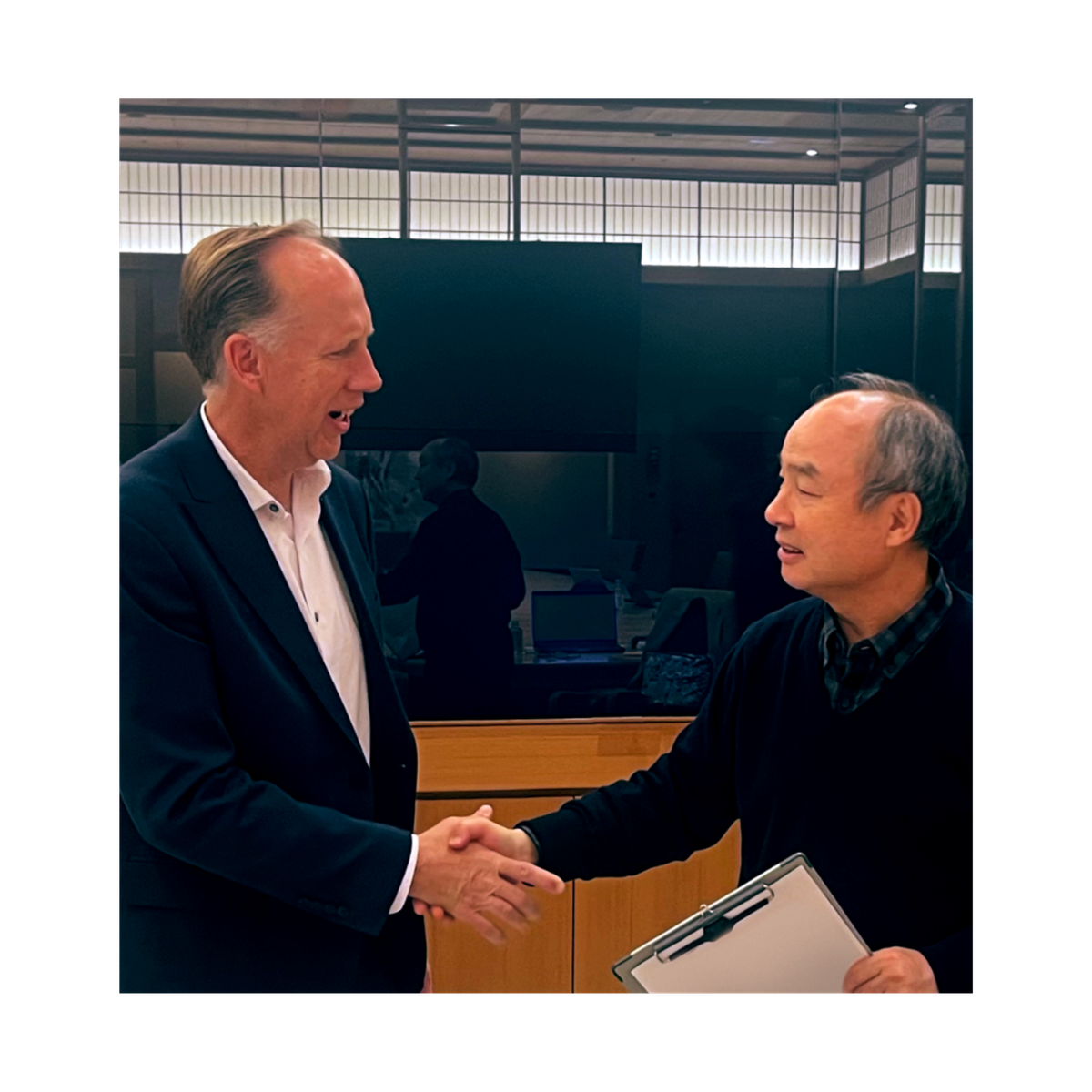
✅ SoftBank Group has invested $225 million directly into Mendon, Utah-based Autonomous Solutions, Inc., while separately capitalizing a newly formed joint venture focused on commercializing autonomous heavy-construction equipment.
✅ The amount invested in the joint venture was not disclosed, meaning SoftBank’s total capital commitment tied to ASI exceeds the publicly identified $225 million.
✅ Founded in 2000 by engineers commercializing technology developed at Utah State University, ASI is not only one of Utah’s longest-operating robotics companies, but one of the state’s older surviving independent technology companies.
✅ The investment follows a multi-year repositioning by ASI that included selling its mining automation business, acquiring Colorado-based Scythe Robotics, previously launching a construction division with SoftBank, and expanding its footprint in both Utah and across the United States.
✅ The transaction also pushes ASI deeper into SoftBank’s multi-billion-dollar bet on “Physical AI,” an effort led by its founder, Chairman and CEO, Masayoshi Son, currently estimated to be worth roughly $76 billion and ranked among the 30 wealthiest people in the world.
MENDON, Utah, and TOKYO, Japan — 25 September 2026 — Twenty-six years after commercializing technology developed at Utah State University (in Logan, Utah), one of Utah’s oldest technology companies just landed $225 million in funding from one of the world’s largest technology investment firms.
And SoftBank Group (TSE:9984) is putting still more money alongside that Cache Valley, Utah firm.
Mid-day yesterday (Thursday, 24 September 2026), Mendon, Utah-based Autonomous Solutions, Inc. announced that it has received a $225 million round of funding from Tokyo-based SoftBank, providing ASI with new growth capital to expand the Utah company’s commercial operations across the construction industry.
Interestingly, the money-side of that news release was buried below the headline that the two firms have formed a joint venture focused on developing and commercializing autonomous construction equipment for large infrastructure projects, with additional, yet currently undisclosed, funding by SoftBank injected into the unnamed J.V.
The news release did state, however, that
"The joint venture has been capitalized by SoftBank Group for meaningful scale across a number of construction use cases, substantially enhancing ASI’s capacity to meet the market’s need for next-generation autonomous solutions focused on civil construction and material-handling."
So the only official number we know for now is $225 million. Beyond that is simply guesswork.
ASI: A Brief Intro
As noted above, ASI began as engineers that "... took technologies developed at Utah State University into the commercial sector ... (and it) has grown to become one of the largest privately held robotics-focused companies anywhere and continues to rapidly scale."
Since its launch in November 2000, ASI has evolved to provide its clients with
"AI-powered brand-agnostic autonomous solutions engineered to transform operation efficiency, safety, and performance with data-driven insights in the most challenging environments."
In other words, SoftBank is not funding a young company trying to prove whether its technology works.
As such, ASI predates much of Utah's current technology ecosystem and places ASI’s birth before Qualtrics, Domo, and many of the software, FinTech and venture-backed companies that later helped define "Phase Two" of Utah’s technology boom and beyond.
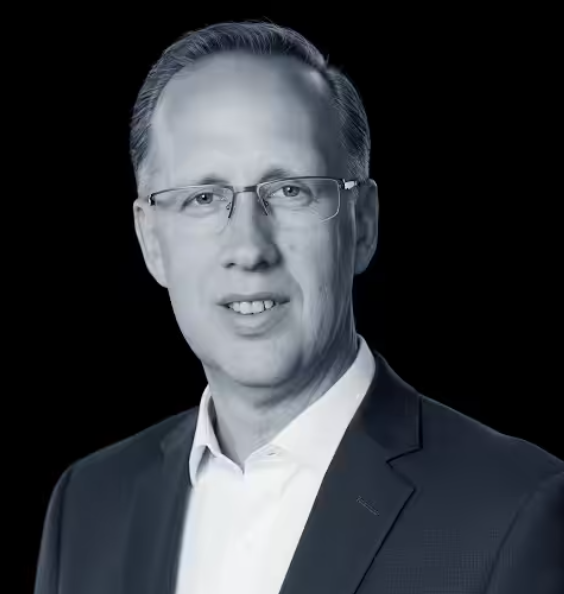
More importantly, ASI has survived those 26 years as an independent private technology company led by Chief Executive Officer and Co-Founder, Mel Torrie, while repeatedly adapting the same fundamental expertise in industrial autonomy to different markets.
Today, ASI operates from a 200-plus-acre proving ground in northern Utah, with offices in
🟠 Lehi, Utah;
🟠 Longmont, Colorado, and
🟠 The Dallas/Ft. Worth, Texas area.
Its first commercial work dates to an autonomous orchard tractor developed for John Deere shortly after the company was formed.
Thursday’s transaction also makes considerably more sense when viewed through what ASI has done during the past several years.
Namely, Sweden-based Epiroc AB purchased 34% of ASI Mining in 2018, then acquired the remaining 66% in July 2024.
Although the purchase price was not disclosed then or since, Epiroc reported that ASI Mining generated approximately SEK300 million in 2023 revenue, about $28 million at then-prevailing exchange rates.
But for ASI, the 2018 investment from Epiroc and its July 2024 purchase of 100% control of ASI Mining served to provide ASI with the capital and people to pursue other off-road automation markets, particularly
🟢 Construction,
🟢 Agriculture,
🟢 Logistics, and
🟢 Landscaping.
In May 2025, ASI announced it had launched its Heavy Construction business with SoftBank, explicitly tying the new operation to growing construction demand and shortages of skilled heavy-equipment operators.
Torrie noted in that news release that
"... automation of construction equipment is critical to address the chasm between ever-growing demands for heavy construction projects and the dwindling labor supply."
In other words, the two companies have already been working together in heavy construction for more than a year.
But no disclosures were made in the May 2025 announcement of any possible SoftBank investment.
Then, in March 2026, ASI announced that it had acquired Longmont, Colorado-based Scythe Robotics, developer of the all-electric autonomous M.52 commercial mower and its Scythe Sight computer-vision system.
Scythe’s autonomous mowers covered nearly two billion square feet for customers across 30 states in 2025, while ASI said Scythe’s AI and computer-vision technology could ultimately help develop next-generation autonomous equipment across multiple industrial sectors.
And then Thursday happened.
As such, I believe yesterday's announcement represents ASI's biggest opportunity yet to take its AI-empowered, autonomous mobility technology to the global marketplace.
Making Mixed Fleets Autonomous
What makes ASI’s technology strategically interesting is not that the company manufactures autonomous bulldozers, loaders, or haul trucks, because it does not.
Instead, its AI-enabled Mobius platform combines proprietary software and robotic hardware intended to make industrial vehicles autonomous regardless of who built them.
As such, rather than asking contractors to discard the mixed fleets they have acquired/sourced from different manufacturers and replace them with a single manufacturer’s proprietary autonomous machines, ASI is attempting to make equipment from multiple OEMs operate together autonomously.
In other words, Mobius operates as the software orchestration layer to coordinate a contractor's entire fleet, regardless of the brand name on the vehicle, including
🔷 Haul trucks,
🔷 Bulldozers,
🔷 Front-loaders and side-loaders,
🔷 Compactors, and
just about any other heavy equipment / machinery you can imagine.
According to Torrie,
“This joint venture with SoftBank positions ASI at the forefront of autonomous construction innovation—built for scale, engineered for longevity, and open to every major equipment brand on the jobsite.”
He additionally said that
“We ... let customers deploy mixed fleets of haul trucks, dozers, loaders, compactors, and more—all operating autonomously together across complex tasks from earthmoving to vertical construction.... we’re inviting the industry’s leading builders of large infrastructure projects, like roadways, airports, railways, waste management, and other adjacent applications, to shape the future of construction with us.”
ASI Moves Deeper Into SoftBank’s "Physical AI" Strategy
The other half of this story sits roughly 5,500 miles from Mendon.
SoftBank Chairman and CEO Masayoshi Son has increasingly centered the Japanese company’s investment strategy around Artificial Super Intelligence and what he calls “Physical AI.”
This is Son's vision of bringing increasingly capable artificial intelligence out of computers and into autonomous machines that perceive and act in the physical world.
In SoftBank's Management Policy and Priority Issues to Address document published 22 June 2026, the company describes Physical AI as one of the key domains supporting the evolution of artificial intelligence.
In fact, since fiscal 2024 through fiscal 2025, SoftBank wrote in this document that it
"... consolidated approximately 20 robotics-related portfolio companies ... under an intermediate holding company, Robo HD ... (portfolio companies) which had been dispersed across multiple entities within our group."
This same document also explained that "... in October 2025, SBG (SoftBank Group) entered into a definitive agreement to acquire the robotics business of ABB Ltd."
This ABB robotics business
🔴 Has customers in over 50 countries,
🔴 Had shipped over 500,000 robotic units globally,
🔴 A robotics business that generated revenue of $2.28 billion in 2024,
with the acquisition expected to close in the second half of 2026.
Masayoshi Son: The Missing Piece for ASI Global Dominance?
To be clear, Son has the financial firepower to pursue that vision at extraordinary scale.
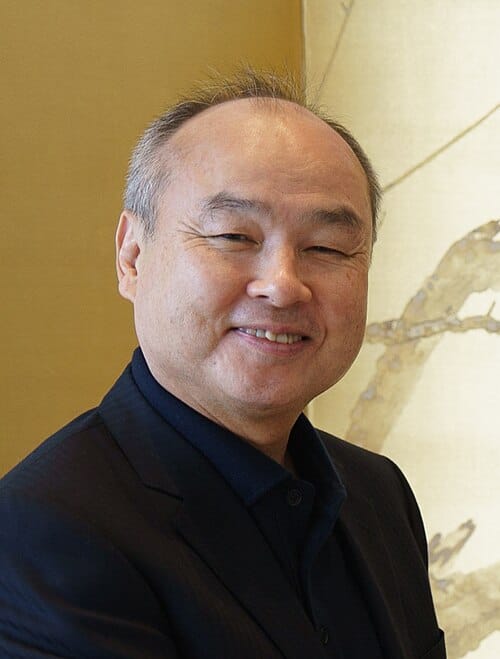
The SoftBank founder is currently listed at No. 29 among the wealthiest people in the world by Forbes Real-Time Billionaires ranking.
But the financial scale behind Son extends far beyond his personal fortune.
As of 30 June 2026, SoftBank Group reported
🟣 Approximately ¥83.11 trillion in equity holdings (~$514 billion), with
🟣 A net asset value of roughly ¥72.30 trillion (~$447 billion), with
🟣 ¥10.81 trillion of net debt (~$67 billion).
Those figures are more useful than describing SoftBank Group itself by a conventional Assets Under Management number (AUM) because the parent operates principally as a strategic investment holding company rather than a traditional third-party asset manager.
And SoftBank's investment machinery itself is enormous as SoftBank Vision Funds had deployed a cumulative $191.6 billion since inception (as of 31 March 2026).
Additionally, SoftBank reported a cumulative investment return across the funds of $236.9 billion and cumulative distributions exceeding $80 billion.
From my perspective, this background helps provide context for SoftBank's over $225 million investment into ASI, as clearly this is transformational-scale capital for the homegrown Cache Valley, Utah firm.
As such, ASI is NOT taking money from a passive institutional investor.
Nope.
It's now backed by a founder-led, technology conglomerate whose controlling personality has spent decades making outsized bets on where technology is headed next.
So ... what's next for Autonomous Solutions?
That IS the question, isn't it?
As of today, I don't know.
But I do know this:
I expect to be in Mendon in the very near future.
One Last Thought. A Postscript, if you Will.
I was just about to hit the Publish button when I got a crazy thought:
What if the reason the $225 million investment number wasn't in the headline was because it's actually the smaller number?
In other words, what if the amount of money SoftBank is investing into its Joint Venture with ASI is actually bigger, but (for some reason), the two parties decided to NOT disclose that number?
Is this true?
Clearly, I don't know.
But when you have really, really smart people working together — and clearly Masayoshi Son and Mel Torrie both qualify — sometimes they do things together that at first glance may not make sense.
But down the road, perhaps sometime in the future, past decisions begin to make sense.
Hmmmmm,
Publisher's Note
Utah Money Watch reports and analyzes companies, transactions, securities, valuations and financial outcomes for informational and journalistic purposes. Nothing published by Utah Money Watch is intended as individualized investment advice or as a recommendation to buy, sell, or hold any security.
As such, this writeup was originally published and distributed to our Subscribers at approximately 1:00pm MT on Friday, 25 September 2026.
However, if this report/article came to your attention sometime after this date/time and you'd like to change that, then (to become a Free Subscriber), please
1. Click on a "Subscribe" button on any Utah Money Watch webpage (visit www.UtahMoneyWatch.com),
2. Enter your name in the proper field in the popup window that appears on-screen, and
3. Enter your preferred email address in the proper field too.
That's it. You've now joined the ranks of our Free Subscribers.
So, thanks.
Team Utah Money Watch


Comments ()