
Utah’s Agricultural Capital at Risk

A $2.3 Billion Industry Confronts Concentration, Succession, and Land Loss
{AUTHOR'S NOTE: Utah agriculture is often spoken of in cultural or political terms, terms like heritage, lifestyle, rural identity. A recent Report published by the Kem C. Gardner POLICY INSTITUTE reframes the conversation more clearly and, frankly, more uncomfortably: agriculture is a capital-intensive economic system showing signs of structural stress. The money, however, tells the real story.}
SALT LAKE CITY — 14 January 2026 — Utah’s farm and ranch operations sold $2.3 billion worth of agricultural products in 2022, according to a Report published recently by the Kem C. Gardner POLICY INSTITUTE at the University of Utah.
On its face, that number suggests stability, even strength. But dig deeper and a more complex, more fragile picture emerges.
In reality, that $2.3 billion is not broadly distributed across the state.
Instead, agricultural production in Utah is highly concentrated, geographically and economically.
In fact, just seven counties — Beaver, Millard, Utah, Iron, Sanpete, Box Elder, and Cache — account for 70 percent of all agricultural sales statewide.
In practical terms, Utah’s agricultural economy rests heavily on a small number of regional engines.
That concentration creates efficiency, but it also introduces risk.
Agriculture’s Uneven Footprint: Big Land but Narrow Margins
At 10.5 million acres, agriculture covers nearly one-fifth of Utah’s total land area.
Yet despite that vast footprint, agriculture represents only a small share of the state's overall economy.
To me, this imbalance matters as agricultural land is capital.
It carries water rights, tax classifications, generational wealth, and political leverage.
When agriculture weakens financially, the land does not simply sit idle, it transitions.
Often permanently.
Based upon its analysis of the most recent U.S. Department of Agriculture Census of Agriculture, the Gardner Report documents a striking trend:
Utah lost approximately 1.2 million acres of farmland between 2002 and 2022 (~10%).
About half of that loss came from cropland, the rest from dedicated pastureland.
Five counties — Duchesne, Box Elder, Rich, Washington, and Tooele — each lost more than 100,000 acres during that 20-year timespan.
Separately, Duchesne County alone lost roughly 249,000 acres.

And as a former marketing consultant to the Utah Farm Bureau, I learned a hard truth:
Once agricultural land exits production, it rarely returns.
A Farm Economy That Isn’t the Primary Job
Perhaps the most under-appreciated finding in the Report is this: agriculture is not the primary occupation for most of Utah's ag producers.
Nearly 69% of farm operators report a primary job outside agriculture.
More than half of Utah’s farms (51.7%), sold less than $5,000 worth of agricultural products in 2022.
In fact, the average net cash farm income statewide was $30,809, with several counties reporting negative averages.
This is not a criticism of small or part-time producers.
It is merely a structural observation:
Utah ag producers increasingly depends on off-farm income to survive.
From a financial standpoint, agriculture in Utah increasingly resembles a hybrid system: part production economy, part lifestyle asset.
Who Produces Utah’s Food? And How Old Are They?
The demographic profile of Utah’s agricultural producers underscores the potential fragility of this ecosystem:
- The average producer age is 56.6,
- More than 35 percent are 65 or older, and
- Fewer than 10 percent are under age 35.
This is not simply a labor issue; it's a capital succession issue.
Farmland, equipment, water rights, and operating knowledge must transition to a next generation that is thin, both honestly and statistically.
Utah’s agricultural challenge is not only producing food today: it is preserving the institutional capacity to produce food tomorrow.
Thankfully, Utah is home to one of the top land grant universities in the country: Utah State University.
And by extension, USU has over 30 campuses and centers throughout the state, something I believe was a wise decision to democratize agricultural knowledge across the State of Deseret and, hopefully, professionally train-up the younger generation in the best agricultural practices of today.
Livestock Dominance and Volatility
Livestock and poultry products account for roughly $1.6 billion of Utah’s agricultural sales, about 70% of the total.
Milk alone generated approximately $530 million in 2022, followed by cattle, hogs, and poultry.
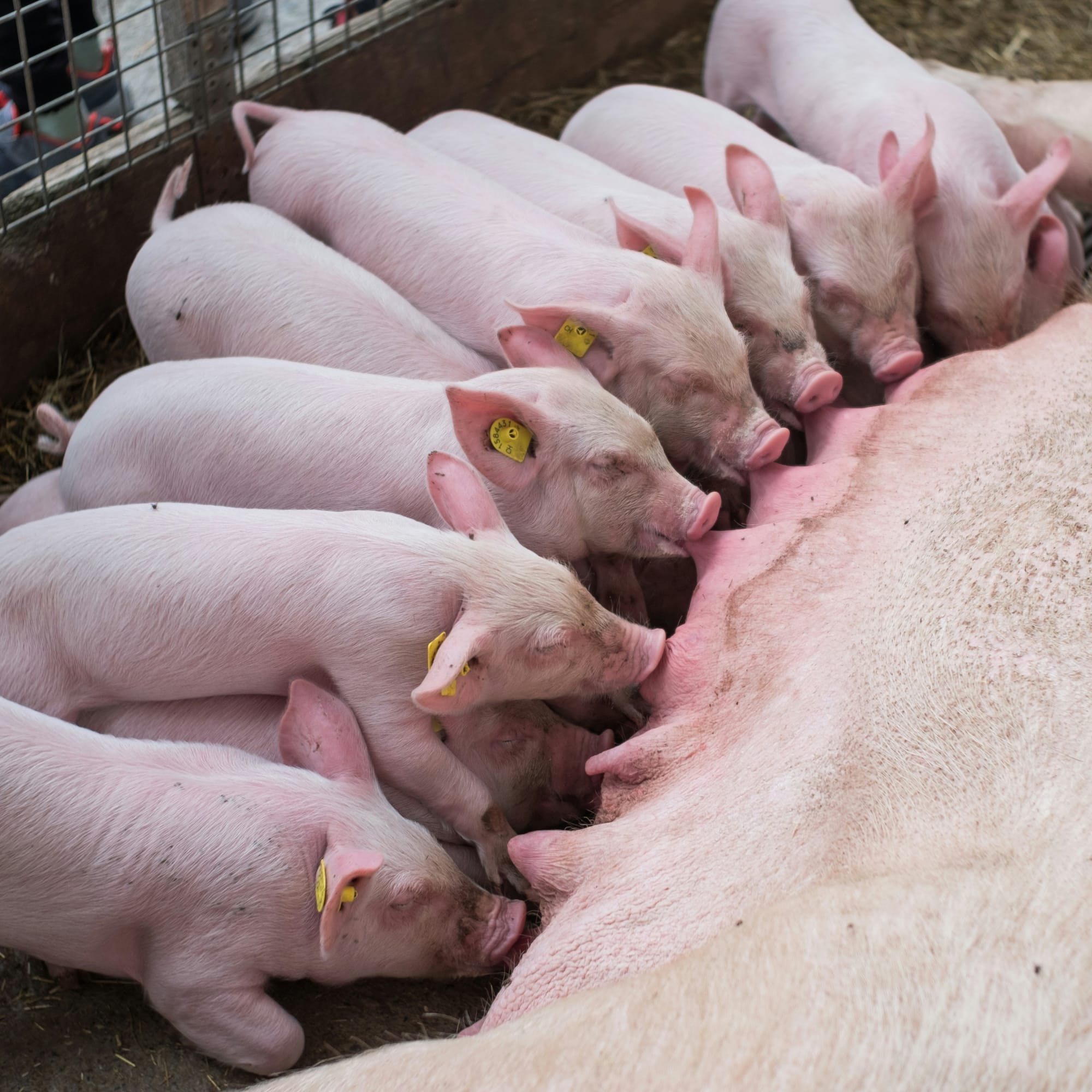
The report notes that Smithfield Foods ended contracts with 26 Utah hog farms in late 2023, contributing to a dramatic decline in hog inventories, from more than one million head in 2020 to roughly 105,000 by 2024.
At the same time, beef prices surged.
The average price of ground beef nationally climbed from $1.71 per pound in 2022 to a record $6.32 in August 2025.
For producers, including Utah-based producers, higher prices offered short-term revenue relief.
Then again, this also leads to higher costs to rebuild herds amid rising feed, labor, and financing expenses.
In other words, high prices do not automatically equal healthy economics.
Labor, Costs, and the Pressure on Margins
According to the Gardner Institute Report, Utah farms employed more than 16,000 workers in 2022.
However, nearly half worked fewer than 150 days per year, reflecting the seasonal nature of much agricultural labor.
At the same time, input costs have climbed steadily since 2020.
While prices received by farmers have risen, they have done so unevenly, introducing volatility that complicates planning and investment.
For smaller operations already dependent on off-farm income, rising costs narrow margins further.
For larger operations, capital intensity also increases exposure to credit markets and policy shifts, especially those initiated with election cycles that lead to changes in leadership in the state house and White House.
Quietly Declining Exports
Utah exported an estimated $365.8 million in agricultural products internationally in 2023, excluding processed foods, a 20.4% decline from the 2020 peak.
Within that export profile, alfalfa hay stands out as Utah’s most important individual crop export, driven by strong demand from Asian markets for high-quality animal feed.
As such, alfalfa is central to Utah’s international agricultural trade identity, even as it is often grouped statistically under broader animal-feed categories.
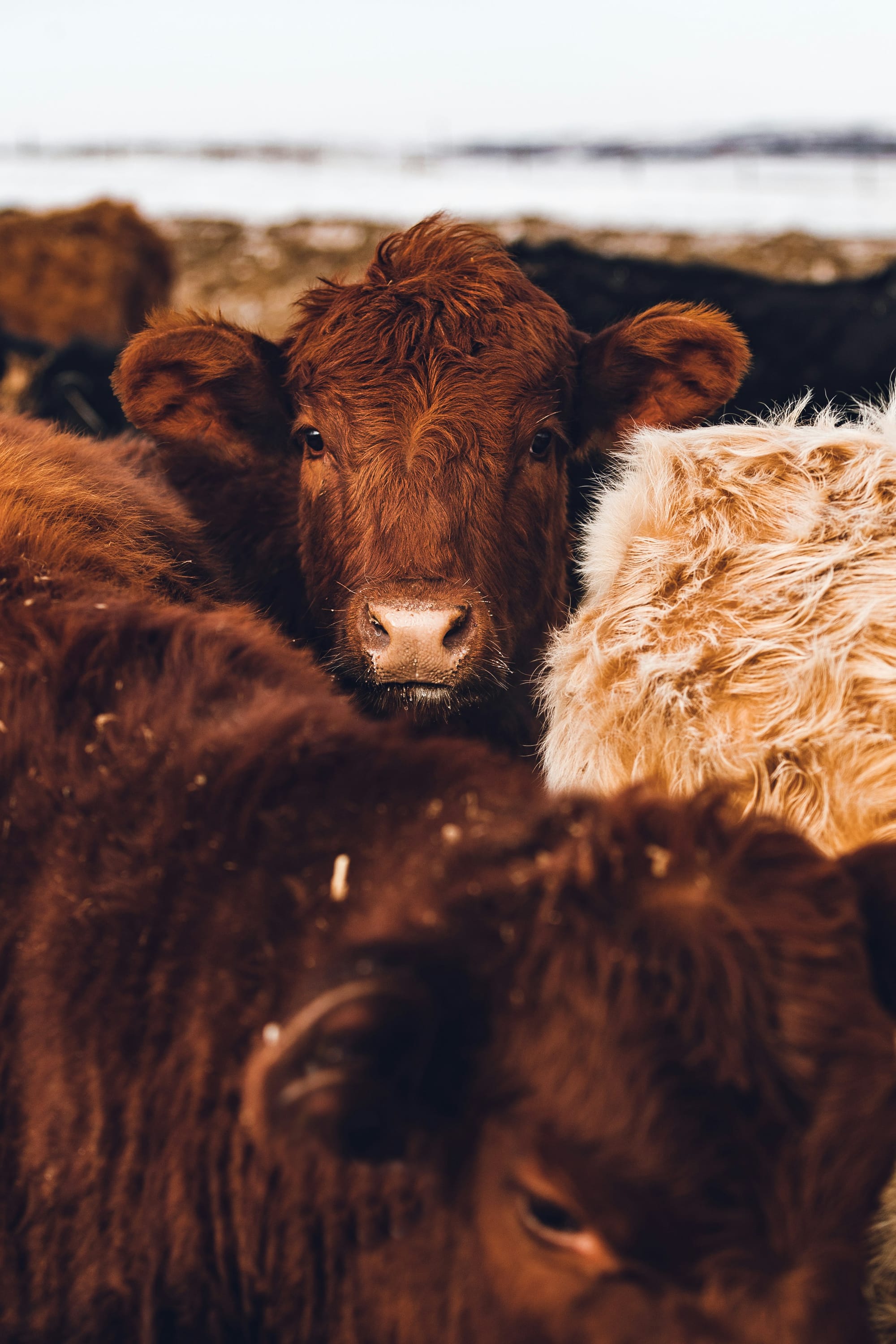
When exports are aggregated by category, however, animal products dominate total export value, accounting for roughly 84.6% of Utah’s agricultural exports, while crop products account for the remaining share.
Dairy, beef, pork, animal feed (including alfalfa), and related livestock products collectively make up the bulk of export dollars.
The distinction matters.
In other words, although alfalfa is Utah’s most visible export crop, the fact is that on its own, alfalfa produces a small minority of the state's agricultural export revenue.
This is a reality with serious implications for water use, trade exposure, and long-term agricultural strategy for the citizens and leaders of Utah, as well as the members of the state's ag industry.
Why This Matters Now
Taken together, the Gardner Institute’s data paints a clear picture.
Utah agriculture remains economically meaningful, land-intensive, and regionally critical.
However, it is also structurally exposed, namely
- Concentrated production increases systemic risk;
- Aging producers threaten continuity;
- Land loss erodes long-term capacity;
- Off-farm income masks underlying fragility; and
- Volatility challenges capital planning.
These are not theoretical concerns.
They are balance-sheet realities unfolding quietly across rural Utah.

Such concerns are particularly relevant given that the State Legislature begins its next general session one week from today on Tuesday, 20 January 2026.
{NOTE: To identify and contact your state legislators, click here.}
What's Next?
I believe that Utah does not face an agricultural collapse.
However, it does face a capital transition moment.
Policy decisions around water, land use, taxation, and infrastructure will determine whether agriculture remains a productive economic sector in Utah or gradually becomes a residual land use sustained by subsidy, sentiment, and side income.
And for any reader who needs a reminder, remember the number of near-empty and bare grocery store shelves during the height of the COVID-19 pandemic, a reality fomented in large part because Utah is a net importer of its food.
That said, my analysis of the money suggests the outcome of the future of Utah's ag ecosystem is not predetermined.
But it is transitioning.
Publisher's Note
This writeup was originally published and distributed to our Subscribers at approximately 11:55am MT on Wednesday, 14 January 2026.
However, if this report/article came to your attention sometime after this date/time and you'd like to change that, then (to become a subscriber), please
1. Click on a "Subscribe" button on any Utah Money Watch webpage (visit www.UtahMoneyWatch.com),
2. Enter in your name in the proper field in the popup window that appears on-screen, and
3. Enter your preferred email address in the proper field too.
That's it. Thanks.
Team Utah Money Watch



Comments ()