
Is Utah’s City Creek Center the “Cousin” of Kansas City’s Potential Pioneer Crossing?
A proposed $2.3 billion development tied to LDS Church-owned real estate interests shows how Utah-based institutional capital, land ownership, and long-duration strategy can shape growth far beyond Salt Lake City.
3 May 2026 — Salt Lake City and Kansas City, Mo. — A real estate entity owned by The Church of Jesus Christ of Latter-day Saints is advancing a proposed $2.3 billion mixed-use development near Kansas City, Missouri.
If approved later this week, this LDS Church endeavor would create another national-scale example of how Utah-controlled institutional capital can shape land, infrastructure, housing, and commercial development far beyond the Beehive State.
The project is called Pioneer Crossing.
As reported by The Kansas City Star, Pioneer Crossing is proposed for roughly 472 acres in Kansas City’s Northland, near Interstate 435 and Highway 152 in Clay County, Missouri.
If approved (and built-out), the development is expected to include
✅ Over 1 million square feet of retail,
✅ Hundreds of thousands of square feet of office space,
✅ Roughly 1,500 residential units,
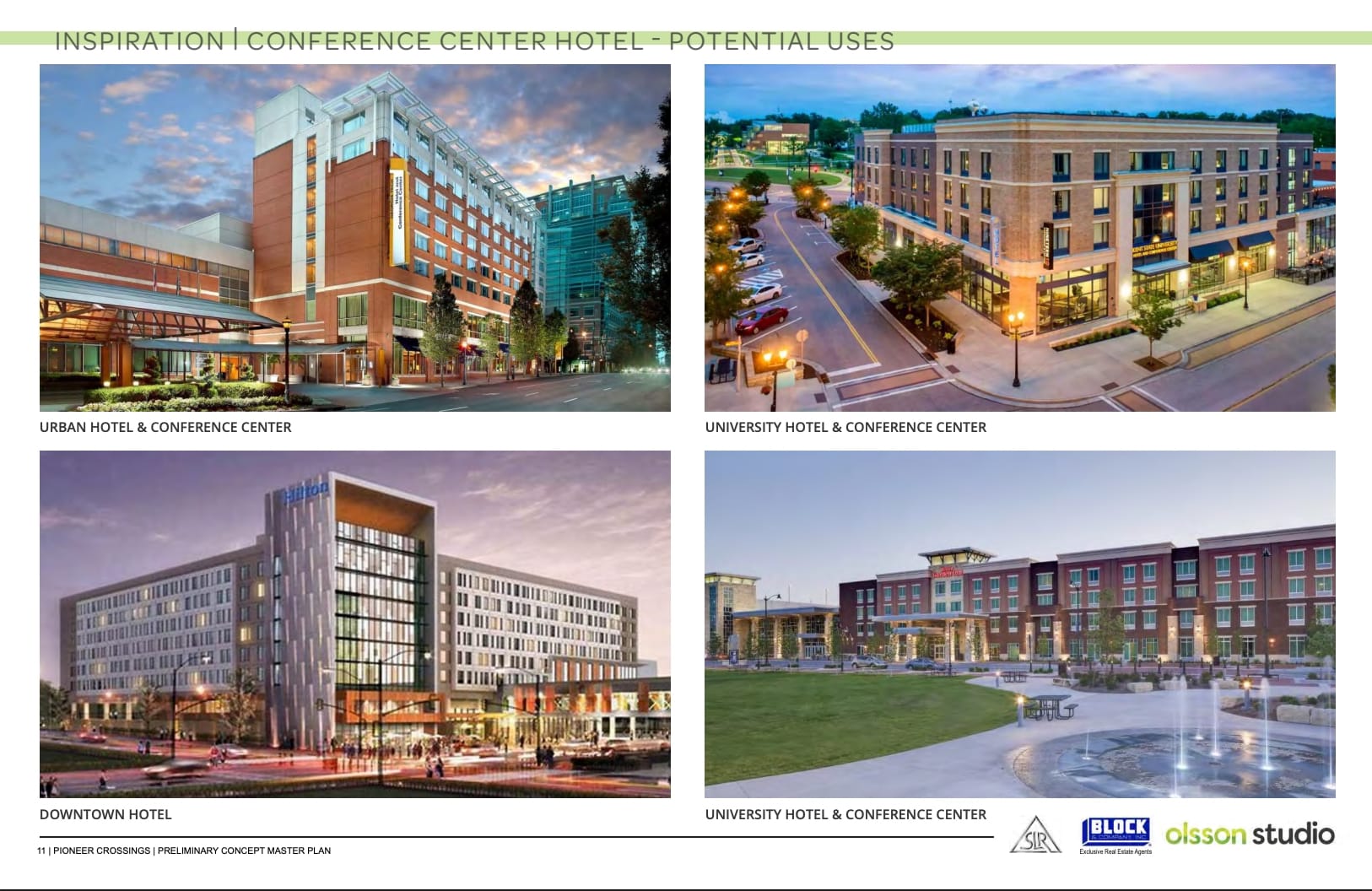
✅ A 150-room hotel,
✅ Restaurants,
✅ Entertainment and sports facilities,
✅ Conference space, and
✅ ~4,000 parking spaces.
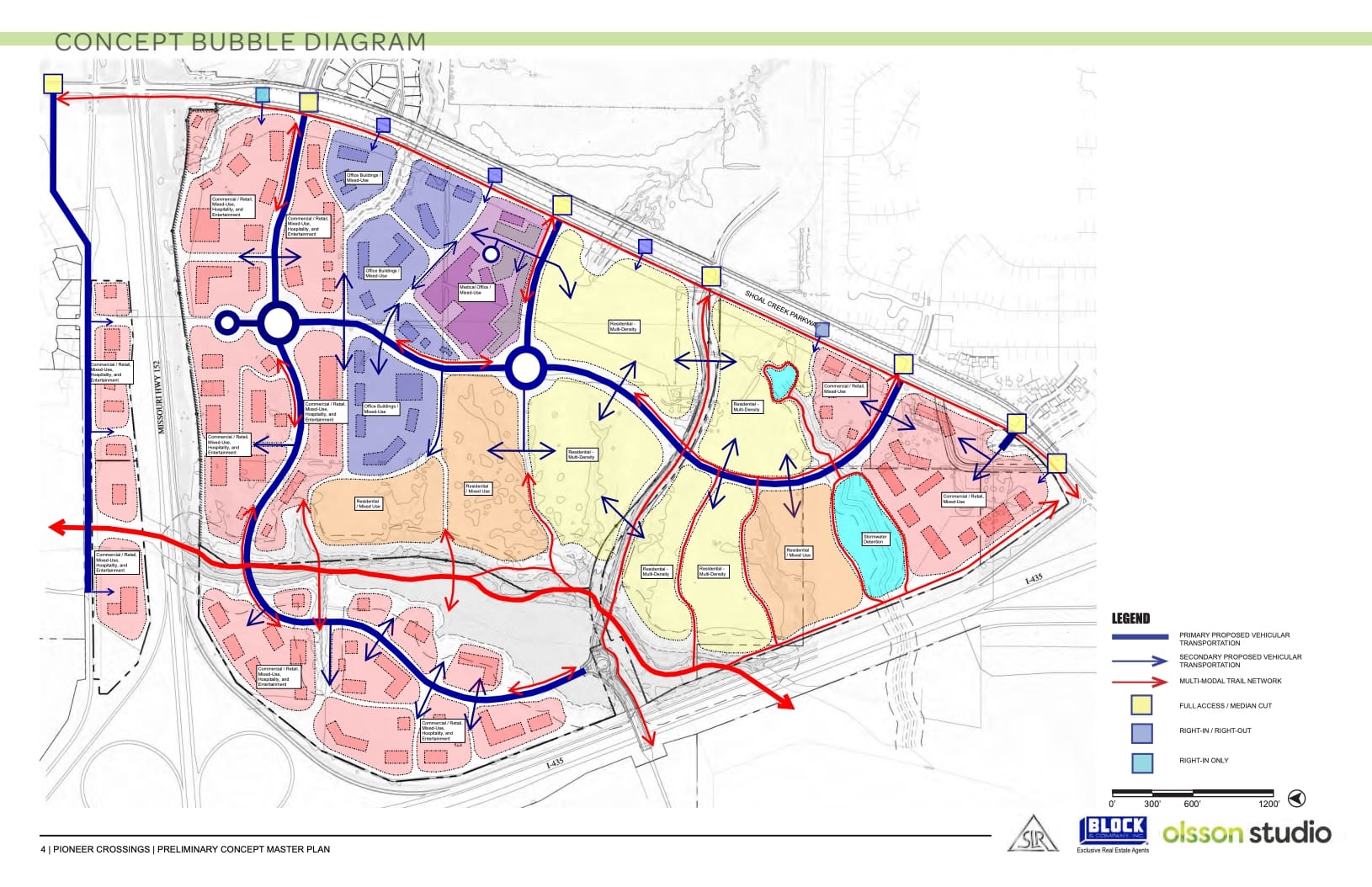
Such a development proposal makes it big enough to matter in the greater Kansas City metropolitan area, while the LDS Church connection makes it matter in Utah.
According to information reviewed by Utah Money Watch, the development is being advanced by Land Reserve, Inc., a Utah-based real estate entity owned by Property Reserve, which describes itself as "the real estate investment arm of the reserve funds for The Church of Jesus Christ of Latter-day Saints."
That does not mean Pioneer Crossing should be described casually as “the Church building a mall in Missouri,” because that would be both inaccurate and premature, but perhaps not by much.
Instead, it means this contemplated development project belongs in a broader financial conversation about the real estate, land-control, institutional, and long-duration investment strategy of one of Utah’s most consequential institutions.
And that's where the story gets interesting, especially since my research shows that no other media outlet in Utah has yet reported on this breaking story.
First, A Caveat
To be clear, this is not yet a clean “project approved” story.
As per the materials reviewed by Utah Money Watch, Pioneer Crossing has moved through part of Kansas City’s public-finance approval process, but full Kansas City Council action is still pending.
Specifically, as reported by The Kansas City Star, the Finance, Governance and Public Safety Committee of the Kansas City City Council voted 21 April 2026 to move the financing plan forward to the full KC City Council, with a review and potential vote on the development proposal slated for this Thursday, 7 May 2026.

So, no, this is not yet a “construction is approved” story. But it is, however, an absolutely a “watch the money, land and power” story.
The Public-Finance Piece
According to multiple news reports in the greater Kansas City area, the LDS Church-owned developer is seeking ~$328 million in public financing to help prepare the site, including preparatory work for
- Roads,
- Sewers,
- Water mains, and
- Other improvements
on the 472-acre parcel.
A 27 April 2026 story published by KSHB 41 (a Kansas City, Missouri TV station) titled "Pioneer Crossing development aims to bring new retail, entertainment options to Northland region." Video downloaded from YouTube 03 May 2026.
If approved, the $328 million would be in the form of Tax Increment Financing reimbursements (aka, TIFs), otherwise, monies paid back to the site developer after such preliminary work was completed.
{NOTE: In plain English, the developer fronts or arranges the capital for qualifying public improvements, then gets repaid over time from incremental tax revenue generated by the project.}
That means Pioneer Crossing is not just a private real estate proposal.
It is also a public-private infrastructure finance proposal, and that is where the money story widens.
Large-scale development happens when land, capital, entitlements, infrastructure, public finance and political approval line up.
Simply put, Pioneer Crossing may be one of those moments.
Why Utah, Kansas, and Missouri Readers Should Care
The easy version of this story is that an LDS Church-owned real estate entity may help build a massive mixed-use development on the northern border of Kansas City.
The more important version is that Utah-based institutional capital may help reshape the growth pattern of another major U.S. metro area.
Obviously, this matters in Utah because The Church of Jesus Christ of Latter-day Saints is headquartered in Salt Lake City, and its real estate, reserve-fund, and investment activities are part of Utah’s financial ecosystem.
Similarly, it matters in Kansas City because Pioneer Crossing would sit inside a cross-state metro economy connecting Missouri and Kansas through
🔹 Workers,
🔹 Consumers,
🔹 Tax bases,
🔹 Retail spending,
🔹 Housing demand,
🔹 Road networks, and
🔹 Development gravity.
It also matters in Missouri because the land, approvals, public-finance structure and historical geography all sit on the Missouri side of the equation.
The Missouri Layer: An Historical Context
There is also a historical layer that should not be overstated here, but it would be shortsighted to ignore.
Independence, Missouri, the county seat of Jackson County, holds deep significance in Latter-day Saint history.
Specifically, the LDS Church’s own historical materials state that Joseph Smith, Jr. (the founder/leader of the faith accepted by its devotees as its inaugural Prophet), identified Independence in Jackson County as a central gathering place for early Church members in 1831, lands roughly a dozen miles from where the proposed Pioneer Crossing site is today.
Additionally, early Latter-day Saints purchased land throughout the region before being driven from the area in the late 1830s.
To be clear, the land for Pioneer Crossing is in Clay County, Missouri and not in Jackson County.
As such, this proposed real estate effort should not be presented as a redevelopment of Independence, nor should anyone assume a direct religious motive based solely on geography.
But it's also clear that the broader Kansas City and western Missouri region is not religiously neutral terrain in LDS memory either.
For many Church members, Missouri is not merely another market. It is part of the faith’s early American geography, tied to gathering, displacement, temple hopes, violence, memory, and belief.
These do not make Pioneer Crossing a religious project.
It does, however, make the regional context more layered than a typical mixed-use development story.
The City Creek Center Precedent
For Utah readers, the obvious local comparison is City Creek Center in downtown Salt Lake City.
When word first got out about plans by the LDS Church to create City Creek Center, it was clear that what was envisioned was not merely a mall.
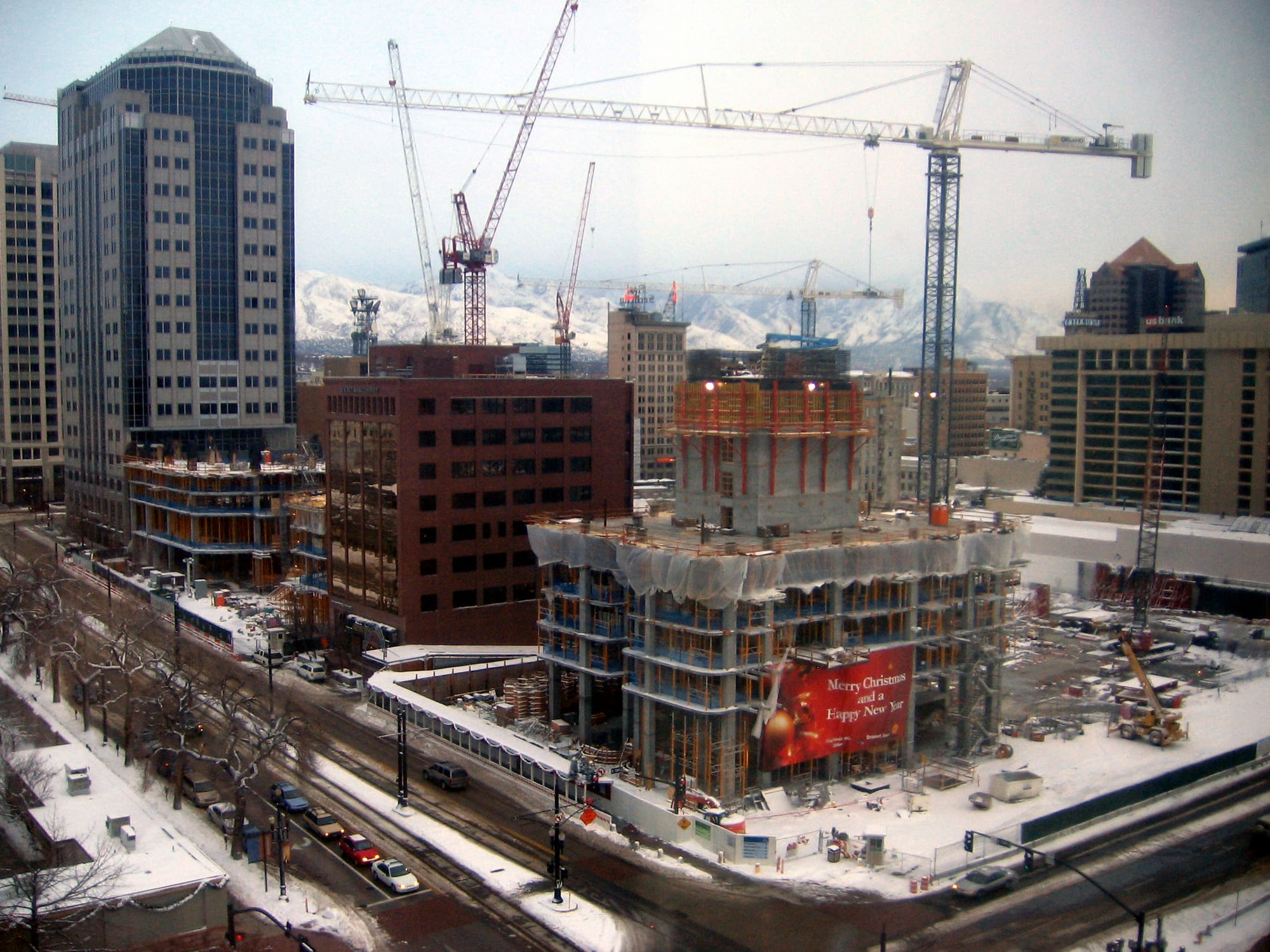
Rather, it was a strategic redevelopment of a key downtown district near Temple Square in the heart of the state's Capital City.
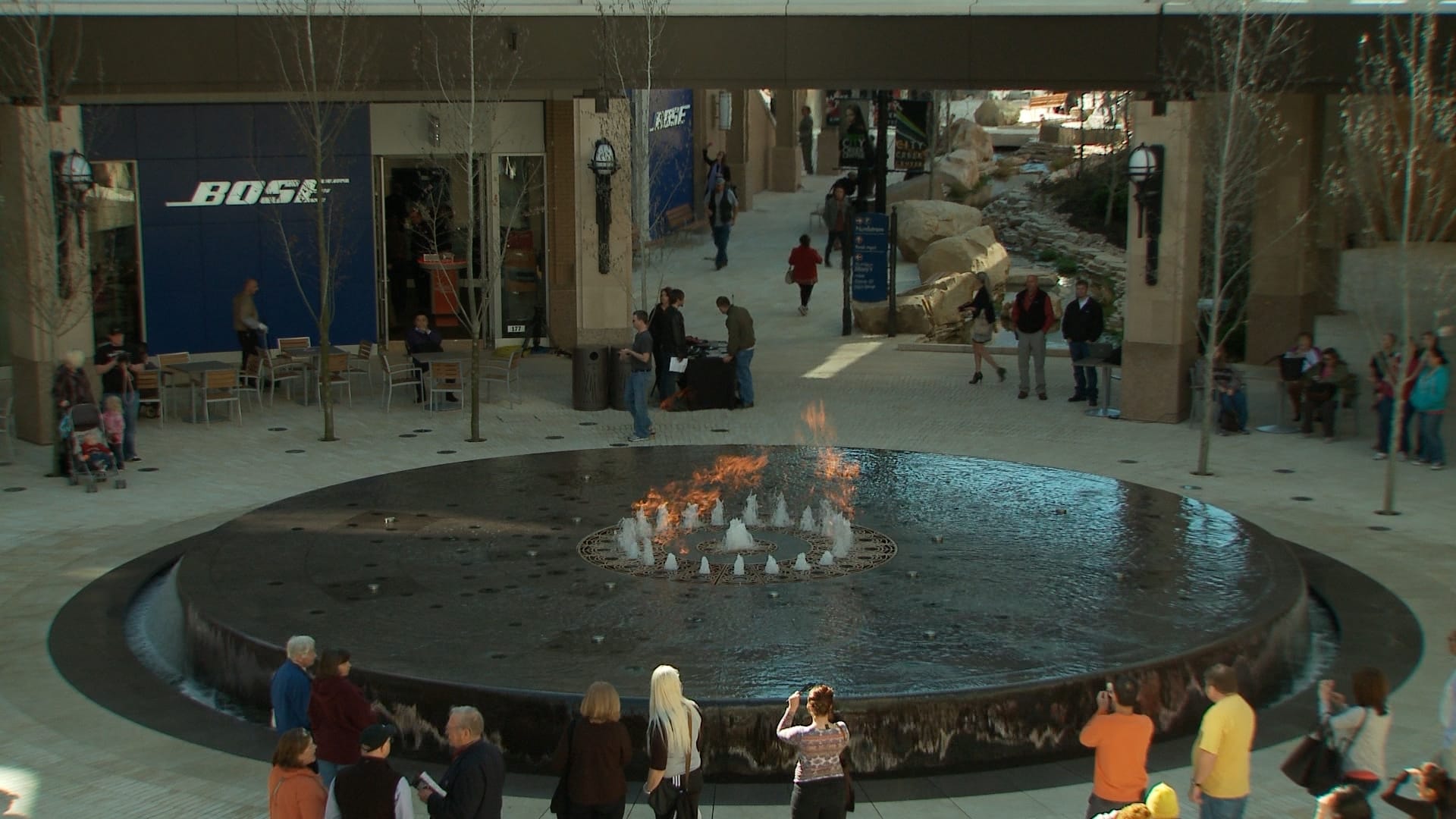
In fact, when opened to the public in March 2012 as a three-block downtown Salt Lake City project, one senior-most leader of the LDS Church described City Creek Center's
“... beautifully landscaped walkways and gathering places, innovative and yet timeless architecture, cascading waterfalls, choreographed fountains and meandering creek.”
In that regard, whatever one may think of City Creek aesthetically, commercially, or ecclesiastically, the strategy was clear.
LDS Church-linked real estate capital was used to stabilize, protect and re-center a critical district around Temple Square and Main Street. It brought together retail, residential, office, parking, streetscape and civic-space considerations in one coordinated redevelopment strategy.
That is why City Creek matters here.
City Creek showed that LDS Church-linked real estate monies can be used not simply to own property, but to shape place.

And in that regard, Pioneer Crossing may represent a related strategy in a different setting.
While City Creek Center was about protecting and reinvigorating the Church’s home-city urban core, it appears that Pioneer Crossing is about deploying LDS Church-owned real estate capacity at regional scale in another major U.S. growth market.
That does not make the two projects identical.
But it does make them strategic cousins.
Not Everything Is Purely Financial
Because this is Utah Money Watch, the financial angle matters. Then again, so do
- The $2.3 billion projected development value,
- The proposed TIF reimbursements,
- The land-control strategy, and
- The tax-base implications.
It's important to remember, however, that not everything the LDS Church does in land, real estate, or property should be interpreted automatically as a conventional profit-maximization exercise.
That would be too narrow of a viewpoint.
The Church may hold, develop or manage land for a wide variety of reasons that can include
✅ Financial return,
✅ Institutional stewardship,
✅ Religious mission,
✅ Civic stability,
✅ Operational control,
✅ Historic preservation,
✅ Community-building,
✅ Agricultural production,
✅ Welfare capacity,
✅ Member access,
✅ Future financial flexibility, and/or
✅ Long-term strategic positioning.
In this regard, an LDS Church property strategy can be both financially rational and institutionally motivated at the same time.
That is part of what makes LDS Church-linked real estate activity difficult to analyze using only standard commercial real estate language.
Land, Patience, and Optionality
The other reason I believe Pioneer Crossing deserves attention is land control.
The Church of Jesus Christ of Latter-day Saints is not merely a religious institution with financial reserves. It is also one of the most significant private religious and institutional landowners in the United States.
In April 2022, The Salt Lake Tribune reported that a database tied to public records showed the Utah-based faith owned at least 1.7 million U.S. acres valued at roughly $16 billion, which the newspaper described as making the Church the nation’s fifth-largest private landowner.

Those numbers should be treated as estimates, not audited Church disclosures, but the financial point remains.
Land is not just an asset on a balance sheet, but in the hands of a patient institution, land can become optionality.
As such, land can be
- Held,
- Farmed,
- Assembled,
- Entitled,
- Preserved,
- Exchanged,
- Leased,
- Developed,
- Sold, and/or
- Converted into a long-term revenue-producing asset.
Most real estate developers operate under pressures of financing cycles, investor return expectations, and market timing.
Similarly, public companies answer to quarterly reporting pressures, while private equity funds generally operate inside fixed investment windows.
Conversely, an LDS Church-owned/linked real estate entity can think differently.
It can hold land longer, wait through entitlement cycles, prepare infrastructure over time, or it can develop when civic, financial and institutional conditions align.
That is why Pioneer Crossing is financially intriguing to me.
The Poppa P Perspective
From my viewpoint, Pioneer Crossing should not be treated as a curiosity merely because the developer is owned by The Church of Jesus Christ of Latter-day Saints.
Instead, I feel it should be analyzed because the project sits at the intersection of four powerful financial forces:
- Long-duration Utah-based institutional capital,
- Large-scale land ownership,
- Public-finance mechanisms tied to infrastructure, and
- Real estate development capable of shaping regional growth patterns.
That combination is rare, and when it appears, it deserves awareness.
Not hostility. Not cheerleading.
Awareness.
Obviously, elected members of the City Council of Kansas City will have their own questions to answer.
- Is the public-finance package justified?
- Will the projected tax base materialize?
- Who benefits most from the infrastructure reimbursements?
- How much risk sits with the developer, and how much sits with the public?
Those are Kansas City questions, but the Utah question is different.
What does it say about Utah’s financial ecosystem when one of the state’s most powerful institutions can be linked to a proposed $2.3 billion development hundreds of miles away?
That is the reason this writeup belongs in Utah Money Watch.
Because money does not stop at the state line.
Neither does influence.
City Creek Center showed what LDS Church-linked capital could do in downtown Salt Lake City.
That said, Pioneer Crossing may show what it can do somewhere else.
But Missouri also adds a layer City Creek did not have.
For Latter-day Saints, the Kansas City region is not just a growth market.
In fact, Western Missouri is part of the faith’s early sacred geography, tied to gathering, expulsion, memory, and belief.
That does not prove religious intent behind Pioneer Crossing. It does, however, suggest the geography carries meaning beyond ordinary commercial real estate.
For if an LDS Church-owned real estate entity ultimately receives approval to move forward with a $2.3 billion mixed-use development supported by hundreds of millions of dollars in potential public-finance reimbursements, Utah, Kansas, and Missouri readers should understand this is more than a Missouri development story.
It's a Utah capital story, a Missouri land story, and a Kansas City regional-growth story.
And from my perspective, it's an important story worth knowing about and following.
Publisher's Note
This writeup was originally published and distributed to our Subscribers at approximately 07:02am MT on Monday, 4 May 2026.
However, if this report/article came to your attention sometime after this date/time and you'd like to change that, then (to become a subscriber), please
1. Click on a "Subscribe" button on any Utah Money Watch webpage (visit www.UtahMoneyWatch.com),
2. Enter in your name in the proper field in the popup window that appears on-screen, and
3. Enter your preferred email address in the proper field too.
That's it. Thanks.
Team Utah Money Watch


Comments ()