
In Just a Week, Utah's Bed Bath & Beyond Announced Two Acquisitions Totaling $300 Million, While Also Signaling a Much Bigger Ambition

The former Overstock.com appears to be building something far larger than a retail rebound from Murray, Utah: specifically, a vertically integrated home ecosystem spanning retail, storage, closets, cabinets, flooring, installation, financing, and data/loyalty economics.
10 April 2026 — Murray, Utah — In a mere one-week period, Bed Bath & Beyond (NYSE:BBBY) unveiled two separate acquisitions, planned purchases that when taken together, suggest the former Overstock.com is attempting something far more ambitious than a simple retail turnaround.
The deeper read here is not merely that Bed Bath & Beyond is buying more assets.
Rather, it is that the Murray, Utah-based parent company appears to be assembling the pieces of a vertically integrated home ecosystem that touches not just retail, but
- Storage,
- Closets,
- Cabinets,
- Flooring,
- Installation,
- Financing, and
- The loyalty and data economics that sit on top of those activities.
If that sounds like a mouthful, here's the plain-English version:
Bed Bath & Beyond increasingly looks like it wants to participate in more of the monetary stack tied to the home itself, not just the products sold for one.
What Happened

The company said those assets would strengthen its omnichannel retail, home services, and products-and-services pillars, and that it anticipates closing that transaction in July 2026.
A related filing described the The Container Store transaction as carrying a $150 million purchase price funded through a mix of common stock and senior convertible notes.
Then two days ago (on April 8), Bed Bath & Beyond announced a letter of intent to acquire F9 Brands, whose assets include Lumber Liquidators, Cabinets To Go, Gracious Home, Thos. Baker, and Southwind Building Products.

In that news release, Bed Bath & Beyond described a headline purchase price of nearly $150 million, made up of $37 million in cash plus about 16 million shares of BBBY common stock at $7.00 per share, while also noting that the stock portion implied a transaction value of about $107 million at the current market price.
That distinction matters.
Lest there be any confusion, yes, there are two separate transactions announced by Bed Bath & Beyond since April Fools Day, each tied to the $150 million range.
But do not be fooled as these are not mirror images of each other.
The Container Store transaction marks the cleaner $150 million deal structure.
Conversely, the proposed F9 Brands transaction — and officially it is a "Letter of Intent" agreement at this point — is being marketed on a roughly $150 million headline basis.
There is, however, a current-market-value wrinkle that makes the economics more nuanced than the headline alone suggests.
The Bigger Strategic Story
To me, however, the real story is not the symmetry of the dollar figures.
It is what these assets become when viewed through the same lens.
With The Container Store, Elfa, and Closet Works acquisition, Bed Bath & Beyond will gain more than 100 physical locations totaling more than 2.2 million square feet, plus modular storage systems, custom closet capabilities, and installation-oriented home-services capacity.
Obviously, 100 retail locations is not nothing.
The company says it expects at least $40 million of annualized cost savings and productivity efficiencies within 12 to 18 months from integrating the four firms into the Bed Bath & Beyond ecosystem.

Should the F9 Brands deal be consummated (and I have no reason to believe it will not close), Bed Bath & Beyond would add cabinets, flooring, distribution, and additional installation and project capabilities to its mix.
In fact, in the Bed Bath & Beyond news release, it claimed that F9 Brands
- Generated approximately $522 million in net delivered sales in fiscal 2025,
- Had roughly $130 million of inventory on hand, and
- Would help Bed Bath & Beyond expand what it terms its "Beyond Home Services" across cabinets, flooring, renovation, and distribution.
Put those two transactions together and the strategy becomes much easier to see.
Clearly, Bed Bath & Beyond is no longer a re-hashing of Overstock.com, its predecessor company from several years ago.
This is also no longer just about online sales of overrun inventories of towels, kitchen goods, nursery products, or home décor.
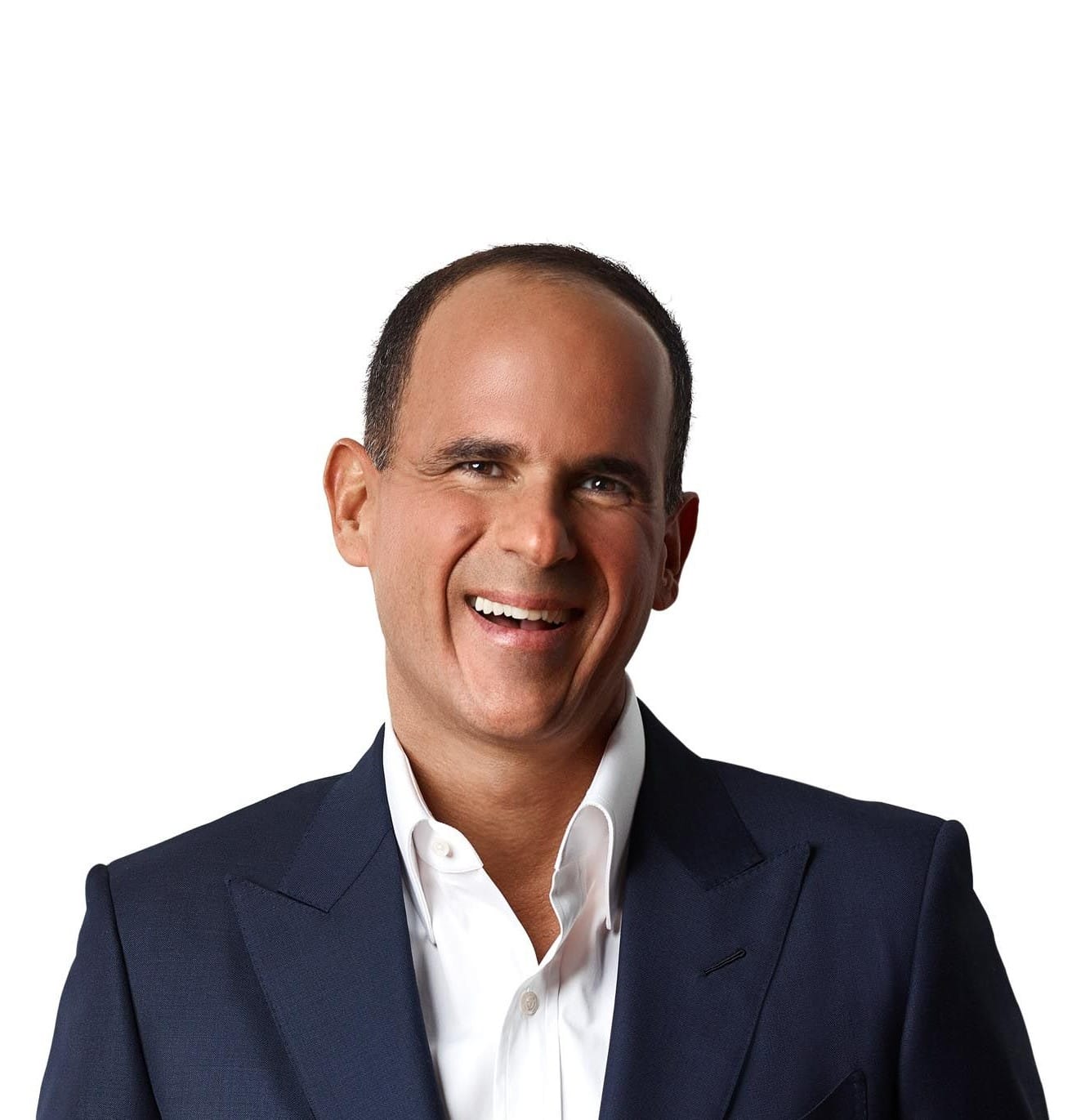
In my opinion, this is instead a further instantiation of the complete remaking of what once was Overstock.com into a totally new animal, a re-casting that tracks all the way back to early October 2023 when celebrity executive and entrepreneur, Marcus Lemonis, joined its board of directors.
As such, these newly announced acquisitions are obviously deliberate efforts to move the company into larger-ticket, project-based home spending categories where
- Average transaction sizes are higher,
- Margins are often better, and
- The opportunity to attach
— Financing,
— Warranties,
— Installation,
— Loyalty, and
— Repeat services
to various sales are materially greater.
Bed Bath & Beyond makes this exact point in its F9 Brands announcement when it describes its expected outcome from this LOI as an opportunity to shift into “higher ticket, higher margin, project-based categories.”
In other words, Bed Bath & Beyond is not merely trying to sell more things.
It is trying to own more of the economic journey around the home.
A Look Back to Look Forward
This approach matters in Utah because this company is not starting from scratch.
The business once known as Overstock.com bought the digital assets and intellectual property of Bed Bath & Beyond out of bankruptcy in June 2023 for $21.5 million, then rebranded around the Bed Bath & Beyond name.
Later that year, the company underwent a leadership transition, and by February 2024 Lemonis had been named Executive Chairman (after being named to its board in October 2023).
One year later (in October 2024), Utah Money Watch reported that the company’s positioning was changing from a more traditional online retail framing toward an “asset-light ecommerce and affinity data monetization company” offering a broader array of products and services.
Modestly, that earlier Utah Money Watch read now looks more prescient, not less so.
In October 2024, the then-named Beyond also announced a strategic partnership with, and a $40 million investment in, The Container Store, alongside plans tied to loyalty, payment solutions, protection products, data-sharing, customer analytics, and broader home-category expansion.
At the time, that could be perceived as an interesting partnership.

Now, however, with the newly announced acquisition of The Container Store, Elfa, and Closet Works, it looks more like that October 2024 announcement was an early marker of much bigger plans for a platform build.
Likewise, the company’s earlier moves involving buybuy BABY and Kirkland’s now fit more neatly into a single pattern, namely
Bed Bath & Beyond has been stitching together a portfolio of brands, retail channels, and monetization levers that, in management’s eyes, can operate less like isolated banners and more like a connected ecosystem.
It's not Just About the Money, Except it Is
The reason this belongs within the digital pages of Utah Money Watch is simple:
This is not just a retail story.
Rather, this is writeup with analysis threaded through the news announcements on Utah-based capital allocation and strategic integration.
This being the case, please do not forget that Overstock.com traces its roots back nearly 29 years, and it has already gone through one remarkable transformation by acquiring the Bed Bath & Beyond digital assets and using that move to recast itself under a far more widely known national consumer brand.
What appears to be happening now is the next stage of that evolution as Bed Bath & Beyond attempts to turn brand traffic, customer data, physical locations, financing options, and home-project services into a more durable economic system.
That is a very different ambition than running an online home-goods retailer.
And if management can execute (and I would NOT bet against Lemonis), it could create a business with more ways to make money per customer, more recurring touchpoints, and a larger claim on the spending that occurs when people move, renovate, reorganize, furnish, protect, or finance their homes.
Bed Bath & Beyond itself has been explicit that its strategy now includes
- Financial services,
- Insurance and protection products,
- Customer data,
- Loyalty infrastructure, and
- Home-services capabilities, all
- Wrapped around retail.
Those are the parts worth watching.
And $300 million total in announced plans to grow via acquisition is worth paying attention too as well.
A Word or Two of Caution
Of course, announcing transactions and successfully integrating them are two very different things.
And no question about it, but the business world is littered with failed acquisitions and mergers.
For all the strategic logic here, Bed Bath & Beyond still has to prove it can integrate brands, align management teams, rationalize real estate, preserve customer trust, and deliver the synergies and margin lift it is implying.
Granted, an argument can be made that it has done so already with the prior bankruptcy acquisition of the BEYOND assets and the separate purchase of the buybuy BABY assets.
Regardless, the company has set an explicit target of at least $40 million in annualized cost savings tied to integration of Kirkland’s, The Container Store, Elfa, and Closet Works, into a cohesive whole, so that's fairly significant.
As is the over $500 million in net delivered sales in fiscal 2025 just from the proposed F9 Brands ecosystem is fairly significant.
But let's be clear: those are still targets, not delivered results.
And while the “two roughly $150 million deals in a week” framing is accurate enough for a headline conversation, investors and serious finance readers should be careful not to treat the two announced values as identical in economic substance — because they are not the same.
Nevertheless, the strategic ambition is clear, as is the burden on executing said transactions.
Publisher's Note
This writeup was originally published and distributed to our Subscribers at approximately 7:00am MT on Friday, 10 April 2026.
However, if this writeup came to your attention sometime after this date/time and you'd like to change that, then (to become a subscriber), please
1. Click on a "Subscribe" button on any Utah Money Watch webpage (visit www.UtahMoneyWatch.com),
2. Enter in your name in the proper field in the popup window that appears on-screen, and
3. Enter your preferred email address in the proper field too.
That's it. Thanks.
Team Utah Money Watch



Comments ()