
A $44 Million U.S. Navy Contract Puts Springville-based CenCore Group at the Forefront of Utah-based Military, InfoSec and Cybersecurity Contractors

Led by its generally low-profile CEO / Founder, yet EY "Entrepreneur of the Year" award-winner, Adam Fife, CenCore has grown organically into a "hidden in plain sight" 1,000-employee team likely worth upward of $1.5 billion through its focus on "bridging the gap between commercial innovation and national defense."
Springville, Utah-based CenCore Group has landed another contract with a branch of the U.S. Department of War (DoW), this one a $44 million multi-year contract with the U.S. Navy.
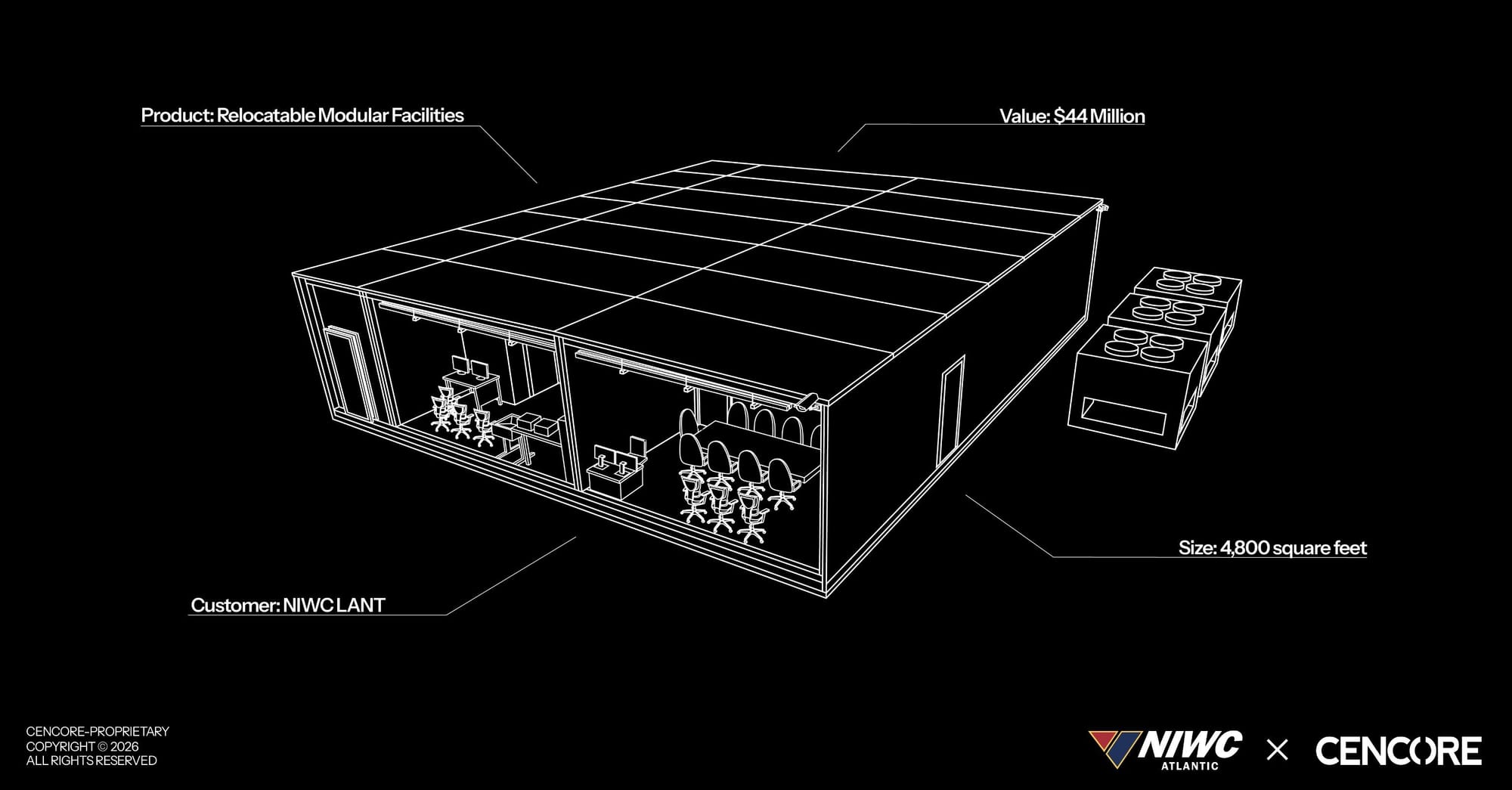
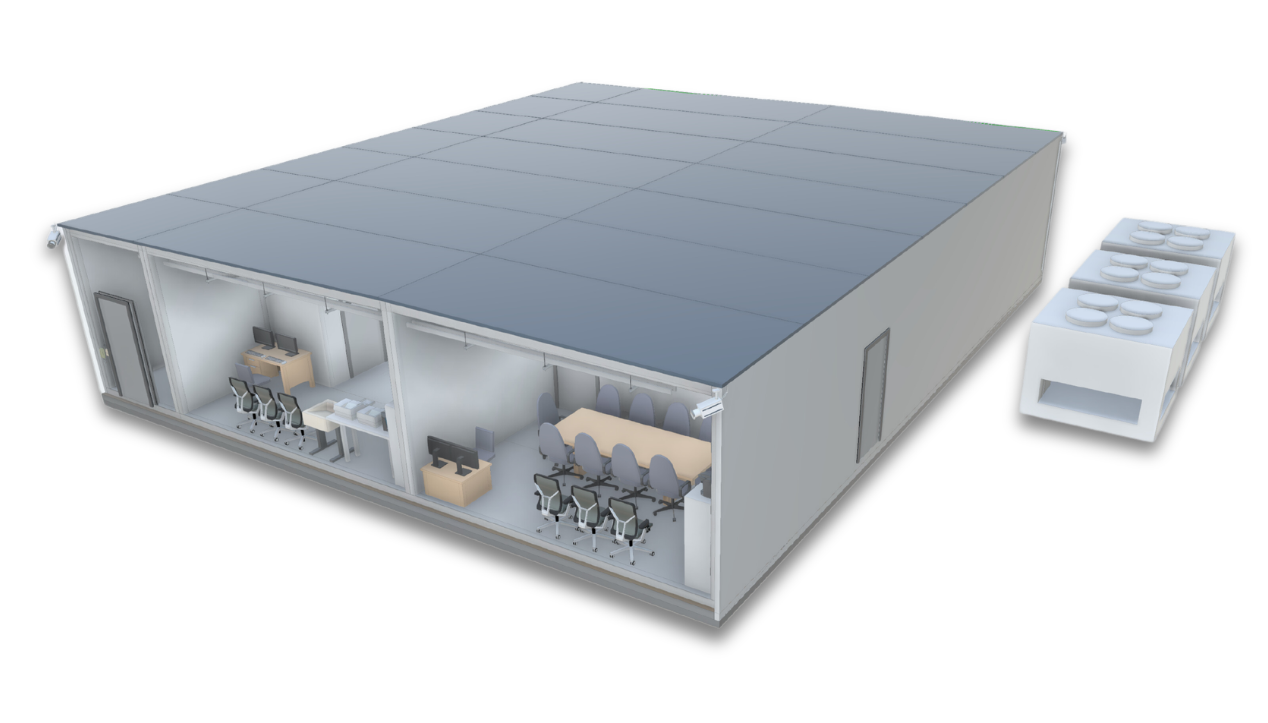
The specifics: CenCore will design, manufacture, delivery and install up to eight communications-secure and relocatable modular facilities for Naval Information Warfare Center Atlantic (NIWC Atlantic) in the Charleston, South Carolina region.
These SCIF-ready (Sensitive Compartmented Information Facilities) and modular/portable buildings are secure, hardened workspaces designed for certain classified operations, with final “SCIF” status granted through a formal accreditation process after they are built and installed on-site.
That SCIF context matters because it reframes the announcement from generic “modular buildings” into higher-consequence infrastructure where compliance, shielding, chain-of-custody and accreditation risk can drive both pricing and award decisions.
What CenCore Will Deliver
In its 18 February 2026 announcement, CenCore said the contract calls for “up to eight” single-story facilities, about 4,800 square feet each, installed on pre-existing concrete pads at NIWC Atlantic sites in the greater Charleston, South Carolina area.
The company emphasized its domestic manufacturing and supply chain resilience, describing the work as part of strengthening the so-called Defense Industrial Base (DIB).
The procurement record tied to this award identifies the customer as the Department of the Navy, with NIWC Atlantic as the issuing activity.
What is NIWC Atlantic?
NIWC Atlantic is part of the U.S. Navy’s information warfare enterprise.
As its websites states:
"We are home to the DOD’s top scientists, engineers, and technicians in the information warfare battlespace. We are forward-based, forward-deployed and globally positioned with America’s warfighters."
In practical terms, NIWC Atlantic supports the Navy and joint forces with engineering, integration and delivery of information-warfare capabilities, including communications, networks, cyber-related mission support and enabling infrastructure.
As noted above, NIWC Atlantic's largest presence is in greater Charleston.
If you've never heard of NIWC Atlantic, chances are you're not alone. But its mission set explains why secure space comes at a premium.
Specifically, NIWC Atlantic is focused on information warfare work that often involves sensitive systems and classified mission planning that cannot be handled in ordinary commercial workspace.
The Procurement Record Added the “Secure” Details
Although not detailed in the CenCore news release, the decision published 8 January by the U.S. Government Accountability Office about this new CenCore contract describes the requirement as the “design and installation of prefabricated secure modular buildings” under a small-business competition, structured as an indefinite-delivery, indefinite-quantity contract.
In this kind of award, the $44 million figure functions as a ceiling, with actual revenue dependent on task orders issued over time.
The GAO decision also spells out why this is not standard modular construction.
Specifically, the original solicitation required 80-decibel radio-frequency attenuation and included specific requirements for 80dB doors, details consistent with facilities designed for high-security, accreditation-driven use cases.
The Protest: Who Filed, What they Challenged, and Why GAO said No
{AUTHOR'S NOTE: This section is a bit geeky; just saying.}
As often occurs in federal government bidding processes, this award drew a formal bid protest, in this instance from Assisted Building Solutions, a small business based in Frisco, Texas.
As noted in the GAO decision, ABS argued that the Navy unreasonably evaluated its proposal and conducted a flawed best-value tradeoff in selecting CenCore, but the GAO denied the protest.

To be clear, the dispute was not abstract as it hinged on the original Request for Proposal language and whether the RFP clearly committed to specific security requirements.
First, the GAO found that the ABS proposal had a significant weakness by failing to adequately address the 80dB RF attenuation requirement for the facilities and their doors.
As such, the GAO agreed the Navy's evaluation was reasonable based on what the proposal did and did not state, including language the agency viewed as falling short of a clear 80dB commitment.
Secondly, the Navy assessed a weakness in the ABS proposal tied to its transportation security planning, concluding the fact that ABS did not provide an adequate plan addressing delivery security requirements, as stated in the RFP.
Here again the GAO sided with the Navy, agreeing that the agency could view the absence of a substantive plan from ABS as a risk that could slow the accreditation pathway.
Finally, price became the "third rail" of the GAO's ruling against ABS.
The GAO’s decision noted that the Assisted Building Solutions had a price point of $19,733,840 with CenCore at $43,599,840.
However, the solicitation made technical approach significantly more important than price, and the GAO found the Navy reasonably selected the higher-priced offer based on greater confidence in CenCore's outlined compliance and execution plans.
And that, Utah Money Watch readers, that was "the tell" in the GAO decision-making process and its affirmation of CenCore as the winning bidder.
Specifically, this was not a low-bid win. Rather, it was a confidence win in a security-sensitive procurement process.
Building on the May 2025 Marine Corps Contract
As it turns out, this $44 million NIWC Atlantic award was not CenCore’s first time in the SCIF lane.
In May 2025, CenCore announced a separate $19 million award tied to the DoW and the U.S. Marine Corps Warfighting Lab, one that will see it build the first of their kind containerized secure units (CSUs), aka, mobile and transportable SCIFs.
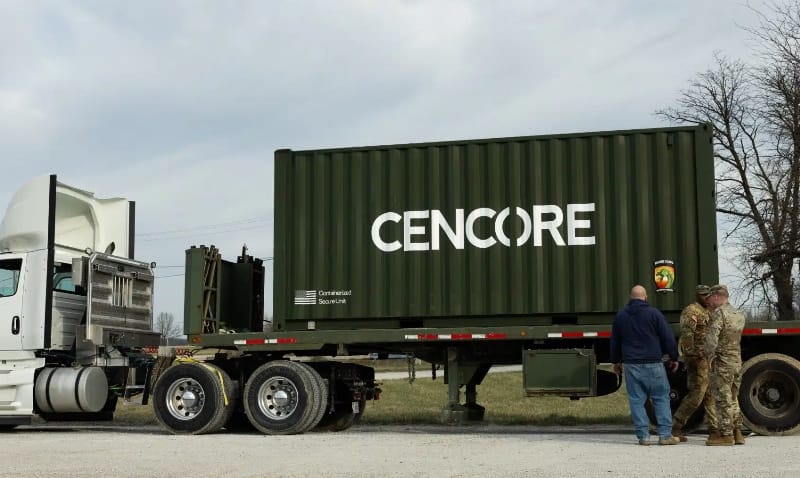
Specifically, CenCore announced last May it had been selected to build mobile SCIFs at the TS/SCI level (Top Secret/Sensitive Compartmented Information) for a U.S. Marine Corps effort described as Project 7/11, one that required containerized secure units intended for rapid deployment.
Axios, which first reported the NIWC Atlantic award, explicitly linked the two CenCore contracts, describing the Navy contract as following that earlier Marine Corps deal.
What's Next for CenCore
CenCore was founded in October 2010 and federally registered in April 2011, which provides a reasonable, public marker for when it entered the formal U.S. government contracting ecosystem.
Although the headline number is $44 million for this NIWC Atlantic contract, the real money story will be the task-order cadence, especially when viewed through the lens of its predecessor May 2025 contract with the U.S. Marines.
If NIWC Atlantic quickly issues orders across multiple sites, this becomes an active production pipeline.
Conversely, if NIWC Atlantic ordering is slower, the $44 million functions more as an upper bound than a near-term revenue guarantee.
Either way, one thing is now clearer than the original release made it sound: CenCore is being contracted to deliver SCIF-ready, accreditation-driven secure modular infrastructure for a Navy information warfare command.
And it did so with a recent Marine Corps SCIF program already on its resume.
CenCore: A Utah Firm Worth Upwards of $1.5 Billion
As noted on the LinkedIn account of its CEO/Founder, Adam Fife, CenCore was officially awarded this NIWC Atlantic contract last September, but the company has only now shared this announcement.
What's been most fascinating to me in digging into both CenCore and researching Fife's background, is the fact that he and his colleagues have built a 1,000-person company, headquartered in Utah, with employees serving in 15 countries, a firm that is "hidden in plain sight."
At 1,000 employees, CenCore is probably producing somewhere between $200 million to $250 million in annual revenue, maybe more, giving it a corporate valuation of between $750 million to $1.5 billion (based upon comparable valuation metrics).
According to a description hidden on the company website:
"CenCore develops modular, mission-ready platforms for secure communications, computing, and integration. We accelerate defense readiness by adapting proven commercial technologies for operational use—mobilizing the industrial base to deliver scalable, tech-agnostic systems that evolve with mission needs and deploy fast at the point of conflict."
The website further states that
"CenCore supports critical missions for the Department of Defense, the Intelligence Community (sic), and homeland security.
"Our systems are deployed globally to enable U.S. military operations, border security, ISR (Intelligence, Surveillance, and Reconnaissance), and enterprise resilience.
By bridging the gap between commercial innovation and national defense, we help customers respond faster, operate smarter, and adapt across dynamic and evolving mission sets."
Adam Fife: The EY "Entrepreneur of the Year" Award-Winner Few Utahns Know or have Heard About
A 2024 winner of one of EY's (aka, Ernst & Young) 2024 Utah "Entrepreneur of the Year" awards for his leadership of CenCore, Fife has led what many would consider an interesting and intriguing career.

Before forming CenCore in Washington, D.C. in 2010, Fife launched and sold two companies (one in construction services and another in the smart-home industry) between 2001 and 2007 in the Provo, Utah area.
{AUTHOR'S NOTE: Fife received a bachelor's degree in International Studies/Arabic from Brigham Young University, a master's degree in Middle East Studies/Political Science from the University of Utah, and completed extensive graduate work in Finance Studies at Harvard University.}
His LinkedIn profile also explains that in the latter part of this time frame he
"Taught upper-level courses (at BYU) on special political issues in the Middle East, Islam and politics, social and cultural roots of terrorism, proliferation of insurgent groups in collapsing states, etc."
Before Fife spoke at BYU for a "Global Awareness Lecture," BYU Communications published in February 2008 that he
"... spent the last six months in Iraq as a senior strategic communication advisor, working closely with the Multinational Force, Iraqi senior leadership and the Government of Iraq on communication strategy and policy." (Emphasis added)
From June 2008 to January 2011 (also before he launched CenCore), Fife was Vice President of Strategic Initiatives at SOS International.
This is a Reston, Virginia firm where his LinkedIn profile notes that he was responsible for "a $3B opportunity pipeline, ... boosted revenue by 40% ... (and) secured $800M in contracts... ."
After moving his family to Mapleton, Utah, Fife also wrote in 2019 for the Daily Herald that he has
"travel(ed) the world working with the US military and government agencies in hostile environments supporting US counterterrorism objectives worldwide."
What's Next for CenCore?
Given how low-profile CenCore is, and has been historically, I suspect we will know when we know, but not before then.
I get that this is a pretty wishy-washy opinion, but perhaps Fife will agree to sit down with me to do a deeper dive into the past, present and future.
We shall see.
That said, I did stumble across a pretty interesting YouTube video of Fife from 2+ years ago where he spoke about "securing the AI-powered future."
I thought is was pretty goo, and definitely on-point.
That said, it's also the only video CenCore has published on YouTube. Hmmmmm.
CenCore CEO & Founder, Adam Fife, explaining in an October 2024 YouTube video the challenges of, and opportunities with, artificial intelligence when it comes to national defense and protecting U.S. warfighters.
That said, congrats CenCore on another FedGov contract.
Publisher's Note
This writeup was originally published and distributed to our Subscribers at approximately 12:05pm MT on Friday, 27 February 2026.
However, if this report/article came to your attention sometime after this date/time and you'd like to change that, then (to become a subscriber), please
1. Click on a "Subscribe" button on any Utah Money Watch webpage (visit www.UtahMoneyWatch.com),
2. Enter in your name in the proper field in the popup window that appears on-screen, and
3. Enter your preferred email address in the proper field too.
That's it. Thanks.
Team Utah Money Watch



Comments ()