
Zanskar’s Recent $115 Million Series C Financing Round and What It Means for Utah’s Energy Future

{AUTHOR'S NOTE: Every once in a while, a funding announcement crosses my desk that is not simply about capital raised or headlines achieved.
In that regard, I believe that Zanskar's funding news aligns with timing, place, and whether a long-ignored sector is finally being forced to reassert itself into the energy conversation.}
29 January 2026 — Salt Lake City — The recently announced $115 million Series C financing round from Salt Lake City-based Zanskar strikes me as a pivotal, consequential moment, for the company, for the energy ecosystem in Utah, and for the United States.
Let me explain.
At first glance, the announcement reads like a familiar clean energy headline:
🔺 Artificial Intelligence,
🔺 Geothermal exploration,
🔺 Venture capital,
🔺 Western U.S. sites,
🔺 Hyperscaler demand.
But beneath the press release headline is something more consequential, especially for Utah, which now finds itself being incrementally repositioned as a next-generation energy state.
This is not just Zanskar’s story.
It's Utah’s story, and it is one the market is only beginning to price into its financial models.
A Record-Setting Year and a Market Signal
That $115 million round was led by Spring Lane Capital and, in alphabetical order, included participation from
- All Aboard Fund,
- Carica Sustainable Investments,
- Clearvision Ventures,
- Cross Creek,
- GVP Climate,
- Imperative Ventures,
- Lowercarbon Capital,
- Munich Re Ventures,
- Obvious Ventures,
- Orion Industrial Ventures,
- Safar Partners,
- StepStone Group,
- Susquehanna Sustainable Investments,
- Tranquillion,
- Union Square Ventures,
- University Growth Fund, and
- UP.Partners.
If you're keeping score, this new funding round brings the total equity capital raised by the company to $180 million.
As such, this recent Series C positions Zanskar for rapid growth by enabling the company to advance its gigawatt-scale pipeline through an historic geothermal exploration and development campaign.
The announcement came following what the company describes as a "record-setting year of geothermal discoveries."
This claim is backed by confirmed, drill-validated resources across New Mexico and Nevada at sites, including Lightning Dock, Pumpernickel, and Big Blind.
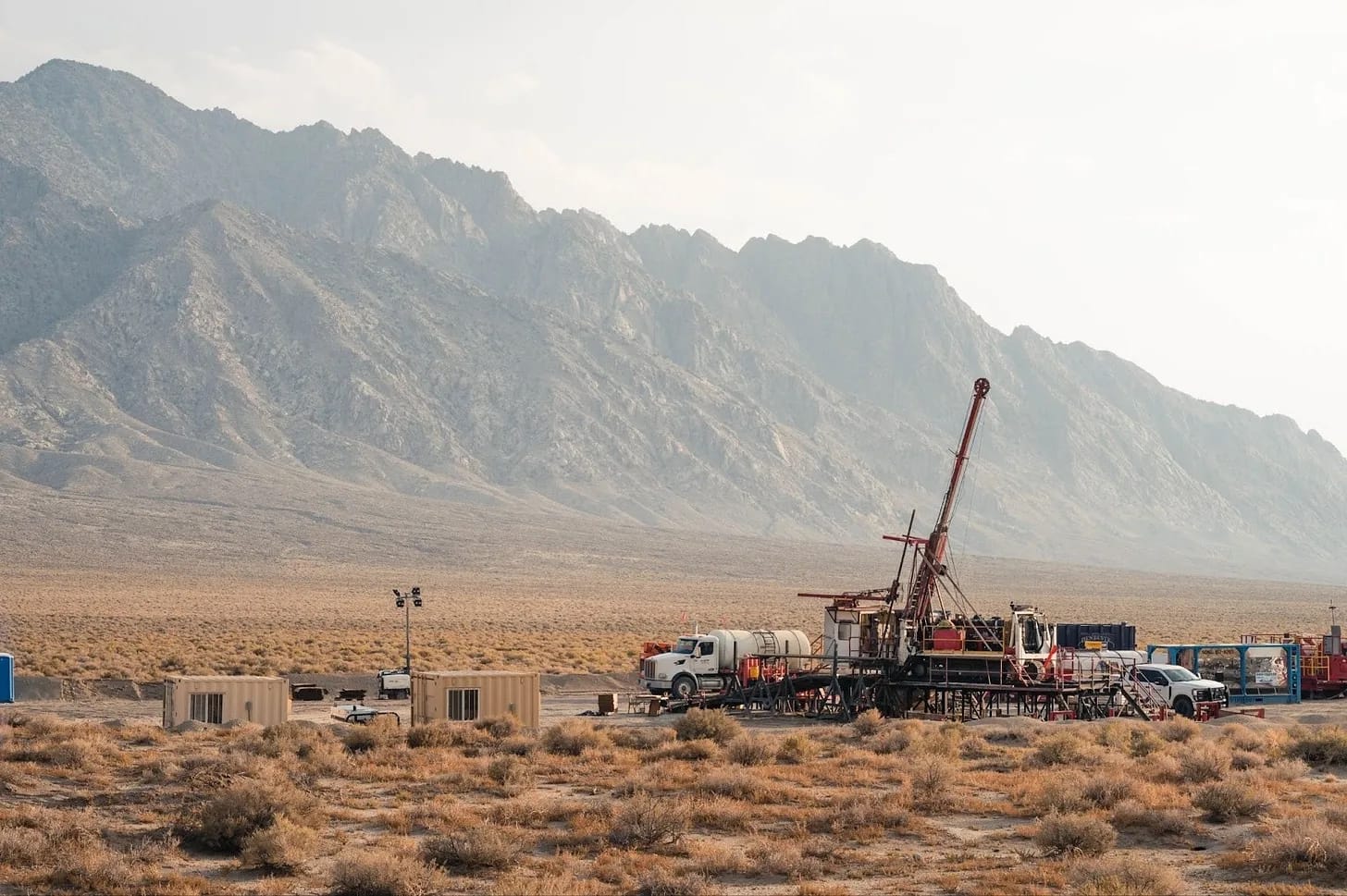
These are not speculative enhanced geothermal systems experiments.
Rather, these are naturally occurring, high-grade geothermal reservoirs that legacy exploration methods either missed or dismissed as too risky.
“We started Zanskar with the belief that AI would have as profound an impact on geothermal cost and scalability as modern drilling technologies have,” said Carl Hoiland, CEO and Co-founder of Zanskar. “(As a result) we’ve already confirmed multiple large, previously unknown geothermal resources across the Western U.S., and deeper drilling has validated that these systems can produce far more energy than expected.”
"We’ve already confirmed multiple large, previously unknown geothermal resources across the Western U.S." — Carl Hoiland, CEO and Co-founder of Zanskar
What matters most about this funding round is not the dollar figure alone but what it signals:
- Confidence in commercial geothermal at scale, and
- A belief in the AI-enabled discovery and development of geothermal energy.
Why Zanskar Isn’t Just Another Energy Startup
What separates Zanskar from much of the geothermal ecosystem is its business model trajectory.
This Series C is not just about expanding an exploration platform.
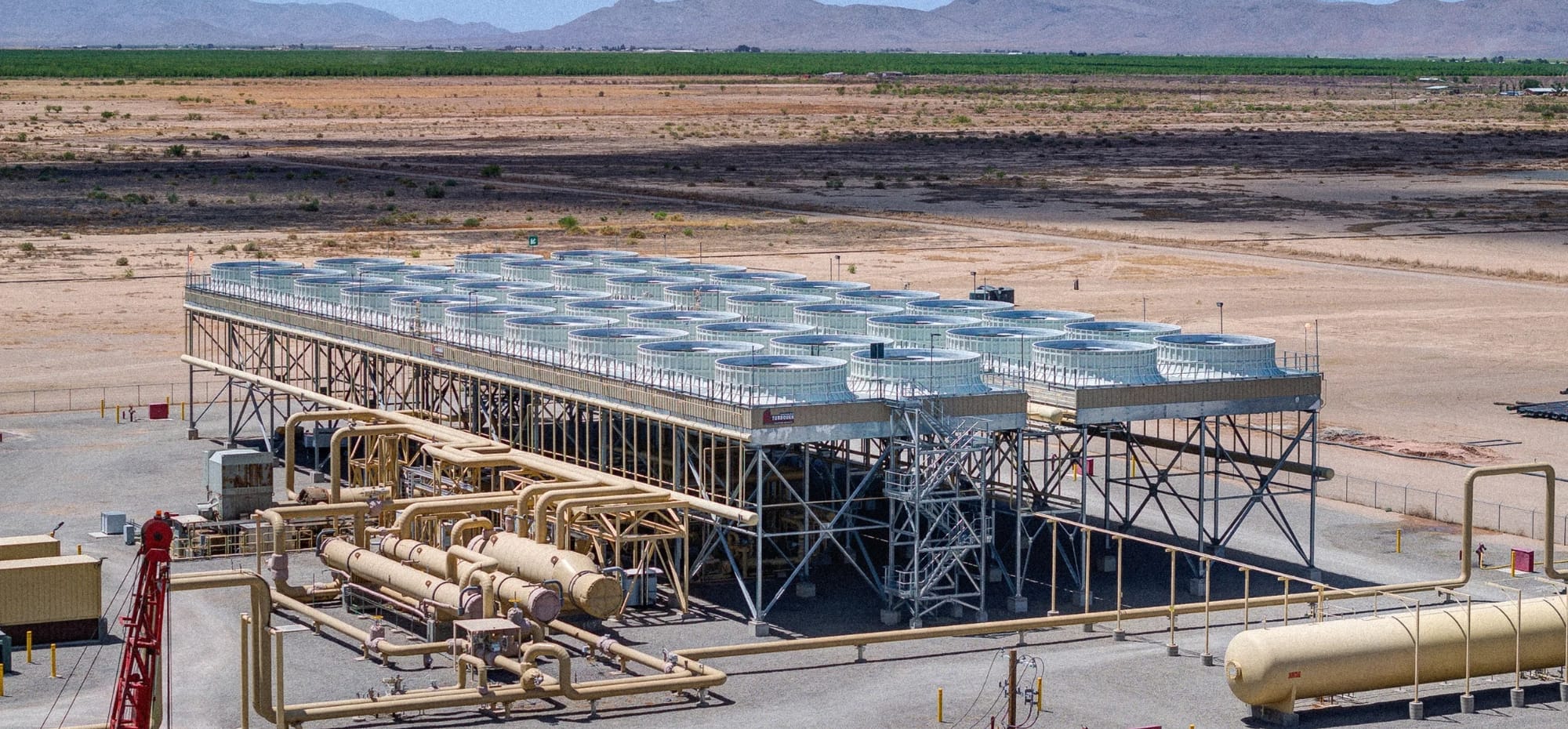
It is explicitly about moving into ownership and construction of geothermal power plants, assets expected to begin delivering power at scale before 2030.
Yet, as noted below, the company has already begun doing so as of the end of 2025.
That shift is material because it moves the company from being a discovery engine to a vertically integrated energy infrastructure company with long-duration cash flows.
In other words, this is not just AI-empowered software or consulting. This is infrastructure.
As such, when investors like Spring Lane step up with capital and board engagement, it signals confidence not only in technology but in project finance viability, permitting pathways, off-take demand, and long-term grid relevance.
That sets a higher bar than exploration alone.
“We (were) eager to support Zanskar because we believe there is a near infinite demand for firm, clean power around the world right now and geothermal energy is one of the only immediate ways to serve this enormous market,” said Jason Scott, Partner and Entrepreneur in Residence, Spring Lane Capital. “Zanskar is unique in that they have identified more geothermal anomalies in North America than any other company in decades.”
The Macro Backdrop: Firm Power Is the New Scarcity
Geothermal’s resurgence is happening for one reason above all: firm (aka, predictable and reliable) clean power is suddenly scarce.
Specifically,
🔹 Solar and wind scaled rapidly, but are suffer with predictable and reliability challenges.
🔹 Storage, however, has not scales as quickly as needed, and without storage, energy ecosystems struggle.
🔹 Nuclear development has been glacial at best over the past 40+ years.
🔹 And transmission expansion has lagged, even as the transmission infrastructure within the U.S. is woefully old and at risk of massive failure at virtually any time.
Meanwhile, data centers, AI training workloads, advanced manufacturing, and electrification are accelerating at the same time.
More critically, hyperscalers want not only so-called "green electrons," but always-on, always available green electrons.
Conversely, geothermal is dispatchable, carbon free, domestic, and land-efficient in ways that intermittent resources alone are not.
The only reason it has not scaled earlier was the perception that geothermal resources were rare and risky.
Zanskar’s approach challenges that assumption by revealing that these heat resources are often hidden, not absent.
Operation Gigawatt and the Re-Emerging Energy Sector in Utah
To understand why this financing round should resonate (especially in Utah), it helps to take a step back and examine the broader energy context.
Utah has historically been an energy state, powered for generations by coal, oil, and natural gas, while also being an exporter of uranium.
Those industries built communities, created jobs, and anchored rural economies.
But in recent decades, Utah’s energy identity was often framed as legacy rather than leadership.
That framing is now shifting.
Central to that shift is Operation Gigawatt, an initiative announced a few years back by Utah’s Governor Spencer Cox, one aimed at increasing the state’s energy production capacity dramatically.
According to the official state Energy Office website, the program focuses on four key areas:
- Increasing transmission capacity,
- Expanding energy production,
- Enhancing energy policies toward clean and reliable sources, and
- Investing in innovation aligned with those policies.
This approach explicitly includes geothermal as one of the prospective sustainable sources.
What makes Operation Gigawatt different from past state-level energy efforts is its realistic focus on reliable power generation and a comprehensive approach that embraces an “all-of-the-above” strategy.
Rather than betting everything on intermittent renewables, Utah’s energy conversation has re-embraced baseload, including geothermal, nuclear, natural gas with carbon management, and hybrid solutions.
Utah’s geology, land availability, permitting posture, and transmission corridors make it well suited for geothermal expansion.
This matters because capital from companies like Zanskar flows not only toward resource potential but also toward jurisdictions that reduce friction between discovery and deployment.
In other words, Operation Gigawatt is not just about adding megawatts.
It's about restoring confidence that Utah can build large-scale energy infrastructure again.
For geothermal developers seeking to move from discovery to deployment, that confidence matters as much as the heat beneath the ground.
Explicitly, if Utah gets this right, geothermal will not replace its energy legacy; it will extend it.
For a state seeking durable, high-wage, capital-intensive industries that align with both state-wide and national grid needs, geothermal is one of the most under-appreciated pieces in the mix.
The Technology That Matters
This is why Zanskar's technological approach is worth lingering on.
The company describes its platform as a unified operating system for geothermal discovery and development that integrates
▪️ Historical geologic data,
▪️ Modern sensing,
▪️ Fault-tolerant modeling,
▪️ Custom AI tools, and
▪️ Rigorous field validation through drilling.
Yes, that's a mouthful.
But that combination is not just faster; it helps the company identify potentially larger and more productive geothermal fields.
Expressed in simplest terms, the technological shift is not trivial.
Instead, it redefines discovery economics, especially when the results are drill-confirmed, and the data supports scalable energy production.
That's Why Capital Continues to Flow
Investors are not sentimental.
Instead, they respond to economics.
What changed is that geothermal exploration and validation costs have fallen, and resource scale has expanded in ways previously unseen.
As such, if even a portion of Zanskar’s claimed pipeline holds true, geothermal could transition from marginal to mainstream in grid planning.
That is why this round includes not only climate-focused funds but infrastructure investors and institutional allocators who seek long-duration assets with predictable output.
These are investors that are betting that energy infrastructure sells at very different multiples and with long-tail timeframes versus typical exploration companies.
The Utah Angle: Follow the Money
Here’s the part Utah leaders and investors should watch closely:
If geothermal development accelerates across the Western U.S., capital will flow toward jurisdictions that reduce friction between discovery and deployment.
Explicitly, Operation Gigawatt increasingly allows Utah to position itself in that category.
That means:
- Engineering and technical jobs,
- Project finance roles,
- Transmission and interconnection build-out,
- Grid infrastructure investment, and
- Long-term expansion of the state’s tax base.
In short, real money.
As Joel Edwards, co-founder and CTO of Zanskar, suggests:
“The resources we need are out there, hidden within the Earth's crust, and we’re working hard to find the most exceptional hotspots to build a new era of geothermal energy, starting in the United States.”
Zanskar’s Series C funding does not announce a Utah plant today, but it increases the likelihood that Utah becomes part of this build-out tomorrow.
What's Next?
Now comes the hardest part for Zanskar: execution.
The discovery aspect is impressive.
But construction is unforgiving.
And future / potential power plants (and the investors and energy companies that back them) do not care about pitch decks.
But if Zanskar delivers even a portion of what this financing round implies —multi-gigawatt pipelines, pre-2030 deliveries, and predictable output — it will not just change geothermal’s reputation; it will change how the grid is built.
That's why Utah is sitting at this very intriguing and promising energy, heat, land, and policy momentum intersection, a state that is positioned to matter more in that future than many currently realize.
To me, the bottom line is this:
Zanskar did not just raise capital. It raised the ceiling on what geothermal, and Utah, can be.
Since I first wrote about Zanskar in May 2024 for Utah Money Watch (see "SLC-based Zanskar Geothermal & Minerals has Raised $30 Million in New Funding to Accelerate its Efforts to Uncover Likely Productive Geothermal Sites in the U.S."), I have considered it to be a very intriguing firm.
However, with this latest funding round, I'm convinced that Zanskar has elevated itself beyond intriguing into the realm of compelling, making it a Utah-based firm for the entire energy industry to track and pay attention to.
In other words, congrats, Team Zanskar!
And welcome to the Big Leagues.
Publisher's Note
This writeup was originally published and distributed to our Subscribers at approximately 09:50am MT on Thursday, 29 January 2026.
However, if this report/article came to your attention sometime after this date/time and you'd like to change that, then (to become a subscriber), please
1. Click on a "Subscribe" button on any Utah Money Watch webpage (visit www.UtahMoneyWatch.com),
2. Enter in your name in the proper field in the popup window that appears on-screen, and
3. Enter your preferred email address in the proper field too.
That's it. Thanks.
Team Utah Money Watch



Comments ()