
Midvale, Utah-Based Bamboo Insurance is About to Conduct a "Surprise" IPO, Raising up to $700 Million with a Target Valuation of Up To $3.24 Billion

EXECUTIVE SUMMARY
✅ Midvale, Utah-based Bamboo Insurance Services is launching an initial public offering of 35 million shares at an expected $18–$20 per share, potentially generating $630 million–$700 million for existing shareholders and producing a fully diluted equity valuation of up to approximately $3.24 billion.
✅ Bamboo itself would receive none of the IPO proceeds. The offering consists entirely of shares being sold by entities affiliated with CVC Capital Partners and White Mountains Insurance Group.
✅ White Mountains acquired control of Bamboo on 2 January 2024 with a $296.7 million equity investment. Roughly 23 months later, it sold most of its interest for $848 million in net cash while retaining an indirect interest valued at $250 million. White Mountains later reported a 4.1-times multiple on invested capital and a 113% internal rate of return.
✅ Bamboo also borrowed $150 million in June and distributed the proceeds to equity owners as a return of capital, while the company had $548 million of term-loan principal outstanding as of 30 June.
✅ IPO Boutique, an IPO research service that tracks underwriting syndicate schedules, currently lists 23 September 2026 as the expected first trading date for BMB. Bamboo, however, has not publicly announced a first-trading date.
15 September 2026 — MIDVALE, Utah and ST. HELIER, Jersey — In a move few Utahns likely saw coming, from a company even fewer Utahns have even heard of, Bamboo Insurance Services is about to "go public" in an IPO slated to raise up to $700 million in the process for its shareholders.
This initial public offering will occur a little over nine months after St. Helier, Jersey-headquartered CVC Capital Partners acquired control of Midvale, Utah-headquartered Bamboo Insurance in a transaction valuing the company at $1.75 billion; as such, this planned IPO is about to ask public investors to value Bamboo Insurance at as much as $3.24 billion.
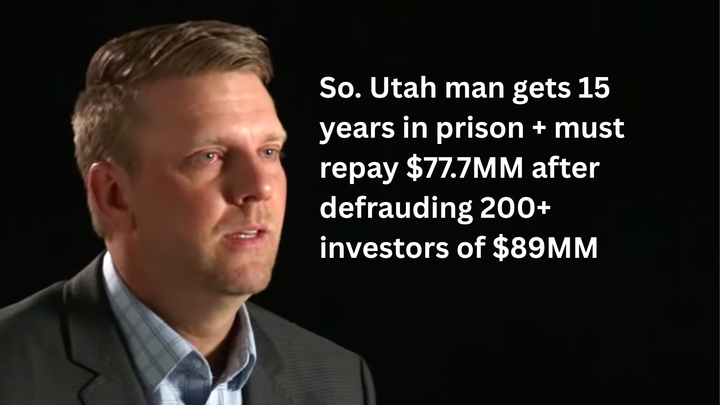
And the guy in the "hero photo" at the top of this writeup?
That's Rob Lucas, CEO and Managing Partner of CVC Capital Partners, the senior-most executive at CVC, In other words, he's the person ultimately behind the pending IPO of Bamboo.
To be clear, Bamboo itself will not receive a dollar of the IPO proceeds.
In its news release published yesterday, Bamboo announced that it has launched the roadshow for an initial public offering of 35 million Class A shares at an expected $18–$20 each.
The offering consists entirely of shares being sold by CVC and White Mountains Insurance Group, as well as entities affiliated with them.
At that $18–$20 price range, the IPO offering would generate $630 million–$700 million for the selling stockholders before underwriting discounts, commissions, and other applicable expenses.
The sellers also expect to grant the underwriters a 30-day option to purchase up to another 5.25 million shares.
If the underwriters choose to exercise their full overallotment at the $20/share price, that would add $105 million to the stock sale, taking the potential gross value of the stock sold to as much as $805 million.

Presuming the IPO occurs as planned, Bamboo's shares will sell on the New York Stock Exchange under the stock symbol, BMB.
IPO Boutique (an IPO research service that tracks underwriting syndicate schedules), lists 23 September 2026 as the expected first trading date for BMB, less than 10 days from now.
It should be noted, however, that Bamboo has not publicly announced a first-trading date.
What Bamboo Actually Does
Bamboo operates primarily as a managing general underwriter (MGU) focused on homeowners insurance.
In plain English, Bamboo originates / services policies and handles
🔴 Underwriting,
🔴 Pricing,
🔴 Policy administration, and
🔴 Claims oversight, while insurance-company partners provide
▪️ Policy capacity and
▪️ Assume the principal insurance risk.
As explained in the amendment to Bamboo's S-1 Registration statement filed yesterday, 14 September 2026, with the U.S. Securities and Exchange Commission, this approach allows the firm to earn commissions and fees without retaining the same balance-sheet exposure as a traditional insurance carrier.
Bamboo built its initial business in California, where it says it represented approximately 4% of the homeowners-insurance market as of 31 December 2025. {AUTHOR'S NOTE: Bamboo entered the Texas marketplace in September 2025.}
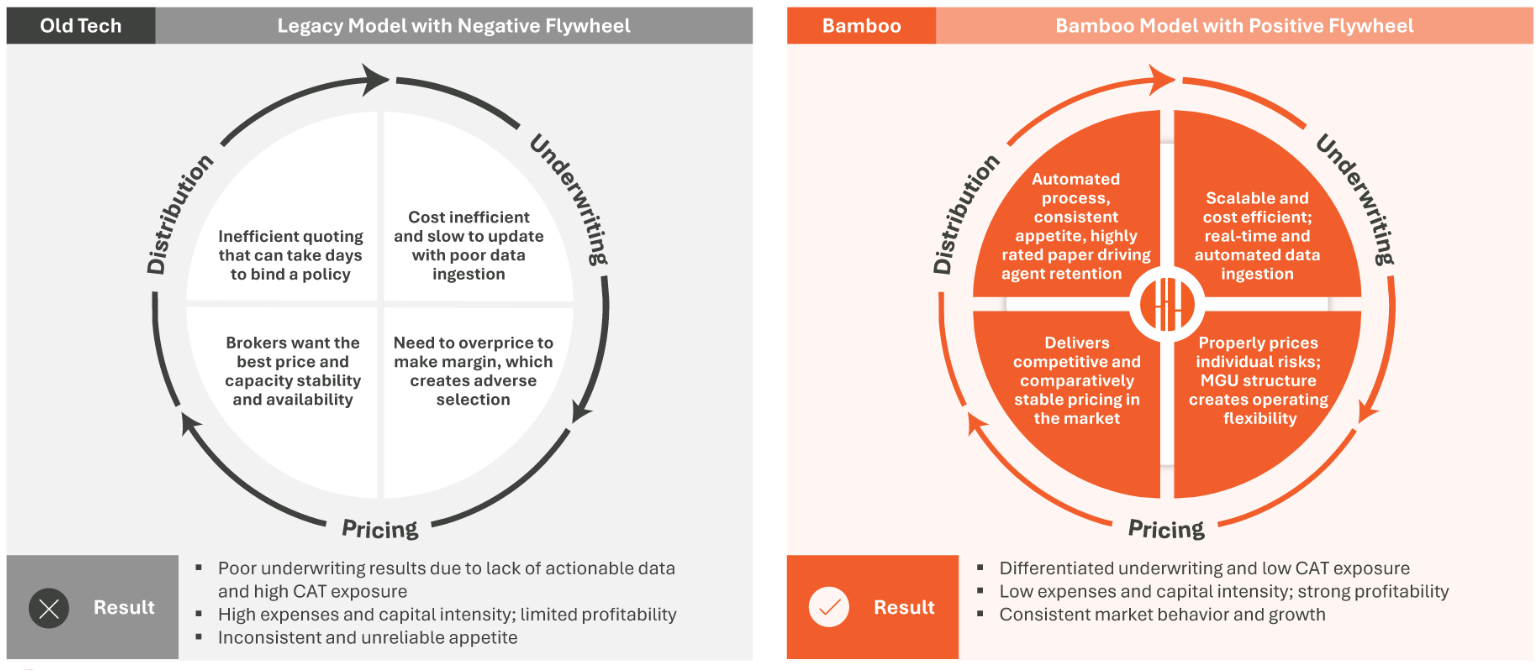
Its principal executive offices are in Midvale, although its insurance business remains concentrated principally in California and Texas.
Because the IPO consists entirely of secondary shares, none of the money raised would become new equity capital for Bamboo to deploy in Utah or elsewhere.
White Mountains' 23-Month Bamboo Run
Bermuda-domiciled financial-services holding company White Mountains Insurance Group acquired control of Bamboo on 2 January 2024 with a $296.7 million equity investment, including $36 million used to retire Bamboo's legacy credit facility and $20 million of new primary capital.
At closing, White Mountains owned 72.8% of Bamboo on a basic-shares basis and 63.7% on a fully diluted, fully converted basis.
Roughly 23 months later, White Mountains notified shareholders via a filing with the SEC that it had sold approximately 77.3% of its equity interest to affiliates of funds advised by CVC for $848 million in net cash proceeds while retaining an indirect interest valued at $250 million.
As noted in its 2026 Annual Investor Presentation, White Mountains reported that as a result of its nearly $300 million of equity invested in Bamboo,
🟢 It had produced a cash return of ~$1 billion,
🟢 Yet retained a 15% fully diluted stake valued at $250 million at closing,
🟢 Producing a 4.1-times multiple on invested capital, and
🟢 A 113% internal rate of return. White Mountains' 2026 investor presentation
As a result, White Mountains enters this IPO having monetized most of its investment in less than two years while retaining exposure to what came next.
A $3.24 Billion Valuation up from $1.75 Billion
When CVC announced on 3 October 2025 that it was acquiring controlling interest in Bamboo from White Mountains, CVC valued Bamboo at an enterprise value of $1.75 billion.
Now, less than a year later, Reuters calculates that Bamboo's fully diluted equity valuation would reach approximately $3.24 billion at the $20 top end of the proposed IPO range.
Naturally, these figures are not apples-to-apple comparables, as
🟣 The $1.75 billion is the enterprise value, while
🟣 The $3.24 billion is fully diluted equity value.
Therefore, the difference is not an 85% investment return for CVC, a private equity firm with roughly €205 billion in assets under management (AUM).
But the financial meaning is clear.
Existing owners are asking the public market to support an equity valuation north of $3 billion only months after CVC acquired control at a $1.75 billion enterprise valuation.
In Between, Another $150 Million Went to the Owners
It's important to note that this IPO does not represent the first owner-liquidity event since CVC took control of Bamboo.
In fact, on 4 June 2026, Bamboo Ide8 Insurance Services amended its credit agreement and borrowed another $150 million.
According to Bamboo's S-1A, the proceeds were distributed to equity owners as a "return of capital."
By 30 June, Bamboo had approximately $548 million of term-loan principal outstanding. Its $40 million revolving credit facility remained undrawn.
When you piece the sequence together, this is the timeline:
🔷 White Mountains invested $296.7 million and acquired control of Bamboo in January 2024;
🔷 White Mountains sold most of its interest to CVC in December 2025 for $848 million in net cash while retaining an interest in Bamboo valued at $250 million;
🔷 The CVC acquisition valued Bamboo at $1.75 billion;
🔷 Bamboo added $150 million of debt in June 2026 and distributed the proceeds to equity owners;
🔷 CVC- and White Mountains-affiliated stockholders are now seeking an additional $630 million–$700 million through this soon-to-occur IPO, a total that could potentially rise to as much as $805 million if the underwriters fully exercise their option at $20/share.
And as noted previously, Bamboo will receive none of the IPO proceeds.
Nothing about the financial timeline above is nefarious or inappropriate. It's merely owners deciding that now is the best time to take monies off the table.
As such, the IPO is not about strengthening Bamboo's balance sheet or financing a newly announced expansion.
It's simply another monetization event for existing ownership.
The Operating Numbers Help Explain the Ask
There is, however, a substantial operating-growth story beneath those ownership mechanics.
Managed Premium at Bamboo increased 58% to approximately $766 million in 2025, up from $484 million in 2024 on a Year-over-Year basis.
And for the first six months of 2026, revenue rose to approximately $173 million from $124 million on a six-month YoY basis, an increase of roughly 40%.
That said, net income moved the other direction, falling to approximately $14 million from $24 million, again on a YoY basis for the six–month period.
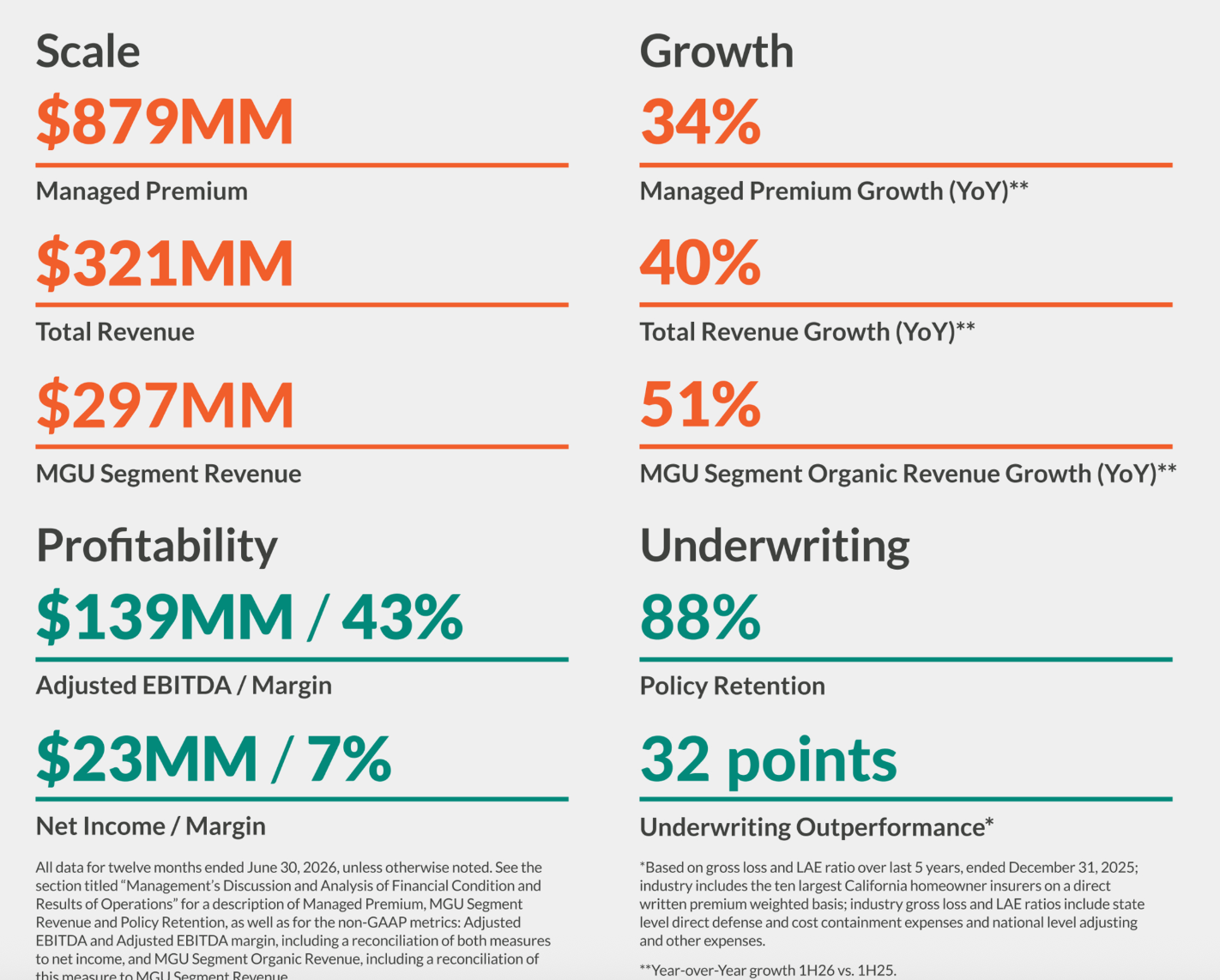
Bamboo also reported approximately $77 million in Adjusted earnings before interest, taxes, depreciation and amortization (Adjusted EBITDA) for the first half of 2026 on a YoY basis, up 82%, with an Adjusted EBITDA margin of about 45%.
Those numbers explain the boosted valuation argument as
✔️ Managed Premium and revenue are growing rapidly,
✔️ Adjusted EBITDA is growing faster still, while
✔️ Bamboo is extending its California-developed model into Texas and potentially additional markets.
That said, the drop in first-half net income may give public investors something else to weigh.
The IPO, therefore, becomes the market test of whether Bamboo's growth and capital-light model justify an equity valuation north of $3 billion.
Post-IPO, CVC Will Keep Control
The IPO will not result in a change in control of Bamboo.
In fact, Bamboo's S-1A says funds managed by CVC are expected to continue controlling more than 50% of the voting power for the election of directors following the offering.
As a result, Bamboo should qualify as a "controlled company" under NYSE rules and use certain corporate-governance exemptions.
Conversely, public investors will acquire an economic interest and a voice in the publicly traded Bamboo, but not control itself.
The proposed IPO, therefore, presents potential public-company investors with a fairly clean proposition:
🟥 Buy into a fast-growing insurance platform at a target valuation of more than $3 billion after
🔺 White Mountains already generated an exceptional return,
🔺 CVC acquired control at a $1.75 billion enterprise valuation, and
🔺 Bamboo's owners subsequently received a $150 million debt-funded return of capital.
Now those external owners are positioning themselves to sell another $630 million–$700 million of stock in the base IPO.
Taken together, if IPO Boutique's timetable holds, the public marketplace will begin delivering its "take" in less than 10 days — on 23 September 2026 — as to the actual valuation of Bamboo Insurance Services.
Publisher's Note
Utah Money Watch reports and analyzes companies, transactions, securities, valuations and financial outcomes for informational and journalistic purposes. Nothing published by Utah Money Watch is intended as individualized investment advice or as a recommendation to buy, sell or hold any security.
That said, this writeup was originally published and distributed to our Subscribers at approximately 07:40am MT on Tuesday, 15 September 2026.
However, if this report/article came to your attention sometime after this date/time and you'd like to change that, then (to become a subscriber), please
1. Click on a "Subscribe" button on any Utah Money Watch webpage (visit www.UtahMoneyWatch.com),
2. Enter in your name in the proper field in the popup window that appears on-screen, and
3. Enter your preferred email address in the proper field too.
That's it. Thanks.
Team Utah Money Watch


Comments ()