
Fervo Energy Raises $462 Million to Advance Cape Station, Its Flagship Geothermal Project in Utah
The estimated Utah Money Watch valuation of Fervo Energy now stands at ~$5 billion.
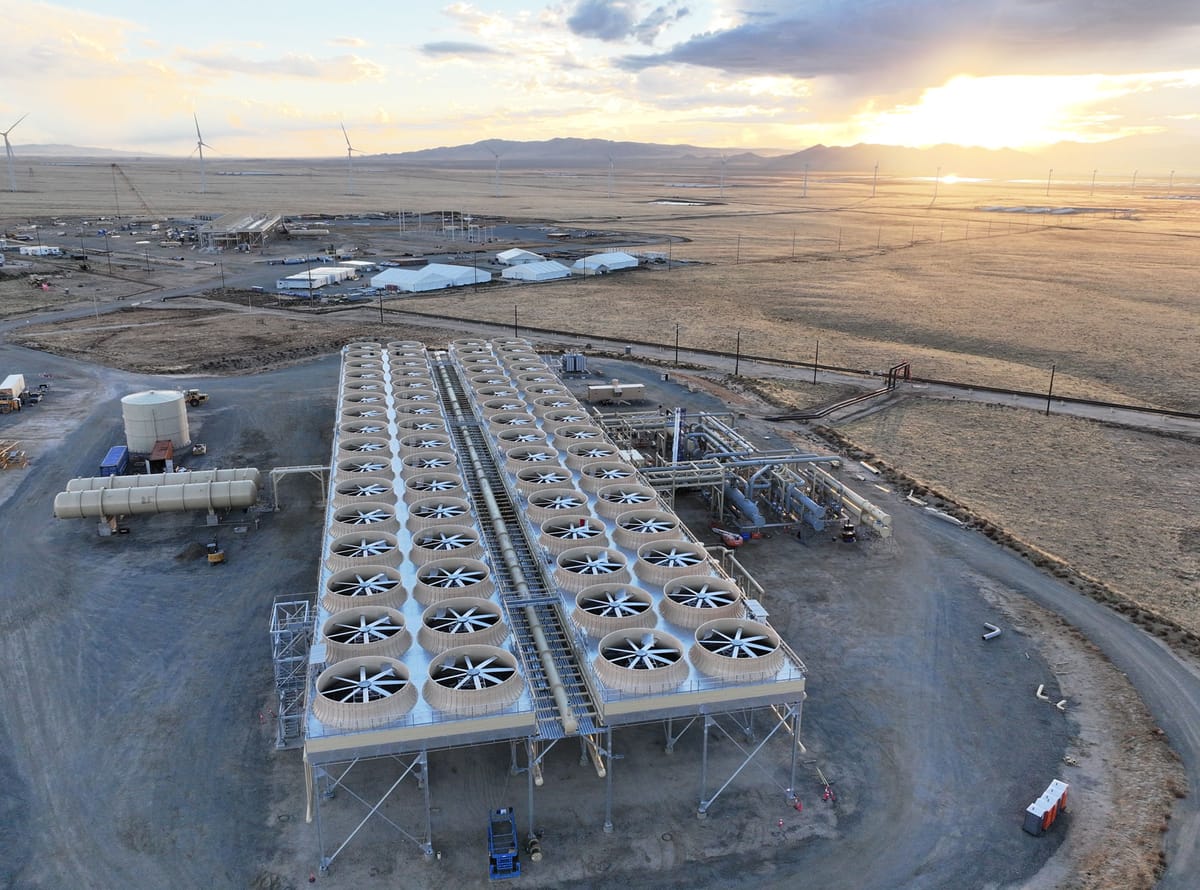
This newest funding highlights a multibillion-dollar-scale bet on next-gen geothermal, in Utah no less, while further strengthening Utah's emerging position as one of America’s most strategic hubs for "baseload" energy.
10 December 2025 — Beaver County, Utah — Fervo Energy, the Houston-based geothermal developer, has secured $462 million in a Series E round of funding to accelerate development of Cape Station, its flagship Utah project and one of the most ambitious enhanced-geothermal builds in the United States.
The funding reported early this morning by Fervo was led by B Capital, with participation from a long list of existing and new investors, namely:
NEW INVESTORS —
🔹 AllianceBernstein, Atacama Ventures, Carbon Equity, Climate First, Google, Mitsui & Co., Dr. Kris Singh (Founder of Holtec International), and JB Straubel.
RETURNING INVESTORS —
🔹 Breakthrough Energy Ventures, CalSTRS, Capricorn Investment Group, Centaurus Capital, Congruent Ventures, CPP Investments, DCVC, Devon Energy, Echelon, Galvanize, Impact Science Ventures, Liberty Mutual Investments, Marunouchi Innovation Partners, Mercuria, Mitsubishi Heavy Industries, and Sabanci Climate Ventures.
As such, the the $462 million round ranks among the largest geothermal financings in U.S. history.
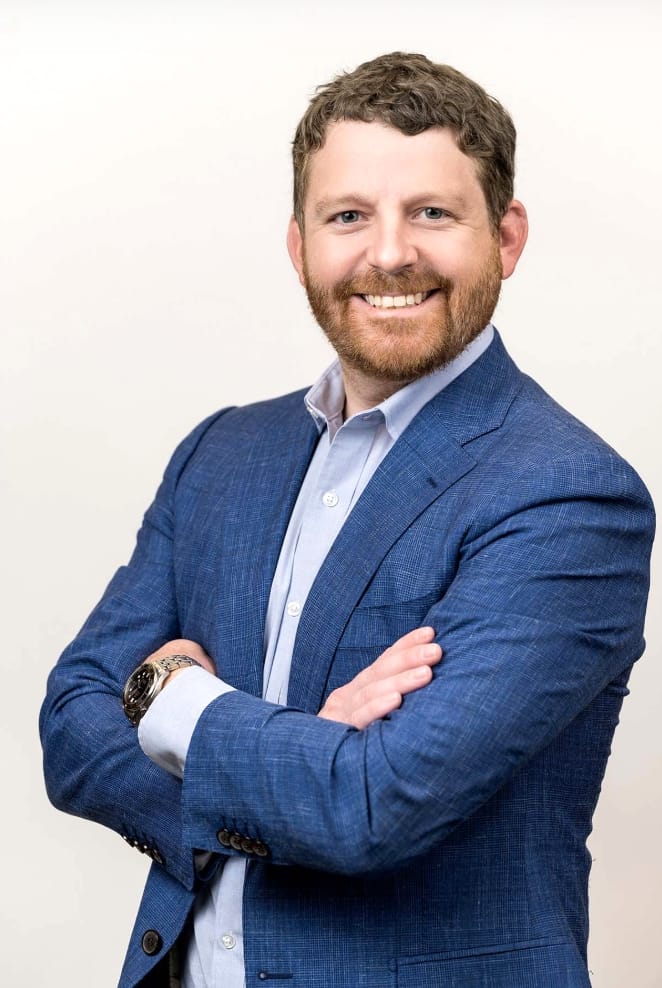
As Tim Latimer, CEO and Co-Founder of Fervo stated in the news release:
“Energy markets are demanding dependable, carbon-free power at an unprecedented scale, and Fervo is uniquely positioned to supply it. This funding sharpens our path from breakthrough technology to large-scale deployment at Cape Station and beyond. We’re building the clean, firm power fleet the next decade requires, and we’re doing it now.”
While Fervo has never disclosed a valuation in any previous funding announcement, Utah Money Watch analysis now places the company well above the billion-dollar threshold.
Specifically, Fervo's total fundraising to date now exceeds $1.4 billion (based on all publicly confirmed and industry-verified rounds), with participation by investors new and old signaling something unmistakable:
Enhanced geothermal has crossed from experimental to mainstream.
Based on capital raised, investor mix, technology maturity, and late-stage climate-tech comparables, our analysis projects a likely post-money valuation for Fervo of roughly $5 billion (within an easily defensible range of $4 billion to $6 billion).
If accurate, this would position Fervo as 1 of the top 2 most valuable clean-energy developers operating in Utah.
The other is ACES-Delta, the massive Green Hydrogen project being developed just north of Delta, Utah that utilizes the only known underground salt dome in a non-coastal environment within the United States.
Additionally, today's funding and expanded valuation also make Fervo one of the most heavily financed geothermal companies in U.S. history.
Why Utah? Why Now?
As it turns out, Cape Station sits atop one of the most favorable geothermal zones in the continental U.S.
Using horizontal drilling and real-time fiber-optic monitoring, Fervo is capturing heat at levels conventional geothermal rarely achieves.
Two-minute overview of the Fervo Energy approach to producing carbon-free electricity via geothermal means. Video found on YouTube 10 December 2025.
Full buildout targets 500 Megawatts (MW) of firm baseload geothermal power sometime in 2028, with an initial 100MW expected to come online in 2026.
{AUTHOR'S NOTE: In plain English, the word "baseload" refers to the amount of electricity the grid must have every single hour, day or night, no exceptions. As such, it’s the power that is ALWAYS on, even if the sun isn't shining or the wind isn't blowing.}
Clearly, Utah’s energy demand curve is steepening, and it's being driven by population growth, AI-driven data center buildouts, and industrial expansion.
Meanwhile, recent pressure from the environmental lobby, coupled with financial constraints, have seen the state’s coal extraction operations retire faster than forecast.
As a result, the gap between what Utah needs and what Utah has is widening.
As stated by Fervo in the past, the firm intends to fill part of that gap with always-available, carbon-free heat that can be easily transformed into always-available, carbon-free electricity.
Follow the Money
Based upon announcements by Fervo and Utah Money Watch analysis, the $462 million infusion targets four mission-critical steps:
🔹 Faster drilling, accelerating reservoir development;
🔹 Expanded fiber-optic monitoring, improving well performance and modeling;
🔹 Long-lead-time infrastructure buildout, including gathering systems and transmission interconnects; and
🔹 Advancing Phase 1 toward commercial delivery sometime in the next two years, 2026–2027.

In a high-rate capital environment, raising almost half a billion dollars for geothermal shows that:
Investors now believe enhanced geothermal can both scale and produce financial returns.
Utah’s Energy Map Is Expanding
Utah’s legacy energy corridors — anchored in Uintah, Duchesne, Carbon, Emery, Grand, and San Juan counties — have long powered the region through oil, gas, coal, and uranium.
Now a new clean-energy corridor is forming across Beaver, Millard, and Iron counties, a corridor based on geothermal, solar, wind, long-duration energy storage of green hydrogen, hydropower, and long-needed transmission expansions.
Together, these legacy and emerging corridors position Utah as one of the most diversified, energy-capable states in both the Intermountain West and the U.S. as a whole.
And it serves as further proof that Governor Spencer Cox was "on to something" when he and the state launched the Operation Gigawatt initiative 15 months ago.

And Cape Station is quickly becoming a flagship of that initiative.
The Questions That Still Matter
Even with this financing, three pressure points define the path ahead:
🔹 Can enhanced geothermal scale at the speed Utah’s growing energy needs require?
🔹 Will long-term Power Purchase Agreements (PPAs) emerge at sustainable pricing?
🔹 Can Utah resolve its energy transmission constraints fast enough?
These questions will shape the state’s energy economics into the 2030s and potentially beyond.
What’s Next?
With drilling advancing and this new financing disclosed, Fervo is expected to release updated construction timelines later this year.
Utilities, grid operators, government official, and major power buyers, especially compute-heavy and industrial users, will be watching closely.
To me the bottom line is this:
Cape Station is no longer merely a clever geothermal experiment.
Rather, it is one of the most capital-backed, technically advanced, and strategically important clean-energy projects unfolding anywhere in the world, not just in America.
And it’s happening right here in Utah.
Publisher's Note
This writeup was originally published and distributed to our subscribers at approximately 7:30am MT on Wednesday, 10 December 2025.
However, if this article came to your attention sometime after this date/time and you'd like to change that, then (to become a FREE subscriber), please
1. Click on a "Subscribe" button on any Utah Money Watch webpage (visit www.UtahMoneyWatch.com),
2. Enter in your name in the proper field in the popup window that appears on-screen, and
3. Enter your preferred email address in the proper field too.
That's it. Thanks.
Team Utah Money Watch


Comments ()