
Draper, Utah-based Redo Raises $81 Million in a Series B Round of Funding at a $1.25 Billion Valuation
The Utah eCommerce-technology company started with returns.
Now it is raising growth capital to build a broader AI-powered platform for brands trying to own more of the customer relationship.
25 June 2026 - DRAPER, Utah - Another Utah technology company has crossed into mythical "unicorn" status, a stage where a private company is valued at $1 billion or higher. And in this case, I believe this is a firm definitely worth watching closely.
Redo, a Draper, Utah-based eCommerce-technology company, has raised $81 million in Series B funding.
As noted in its 23 June 2026 news release, Redo is valued at $1.25 billion, with the round led by Smash Capital, and participation from existing investors, Draper, Utah-based Pelion Venture Partners and Cervin Ventures.
That's the headline, but the better story may be what the financing suggests about where Redo is trying to go.
When Redo actually launched Version 1.0 over five years ago*, its focus was helping firms navigate product returns via a Software-as-a-Service platform.
As noted in this week's funding release, however,
“The funding will support product development, artificial intelligence initiatives, and international expansion.”
In other words, Redo has moved beyond tech supporting SaaS-driven product returns to continue to build and deploy technology to help brands manage customer relationships across multiple eCommerce touchpoints.

That suggests that Redo wants to become part of the operating layer between a brand and its customer.
Obviously, that's a much larger ambition than mere product returns tech.
From Returns to Full Stack eCommerce Platform
For direct-to-consumer brands, returns are not just operational headaches. Instead, they are problems for:
- Margins,
- Customer-service,
- Inventory management,
- Operations,
- Logistics, and
- Customer-retention.
A weak returns process turns a disappointed shopper into a refund. Conversely, a better returns process may turn that same shopper into:
🔹 An exchange,
🔹 A store credit,
🔹 A repeat purchase, or
🔹 A satisfied and loyal longer-term customer.
So product returns was Redo's entry point into eCommerce.
But as noted in the company’s Series B funding announcement, Redo has expanded beyond returns and exchanges into:
✅ Order tracking,
✅ Package protection,
✅ Fulfillment support,
✅ Customer service tools,
✅ Marketing capabilities, and
✅ AI-empowered, eCommerce experiences.
According to the Redo website, more than 4,500 brands now use its platform, with over 1,750 merchants using multiple Redo offerings.
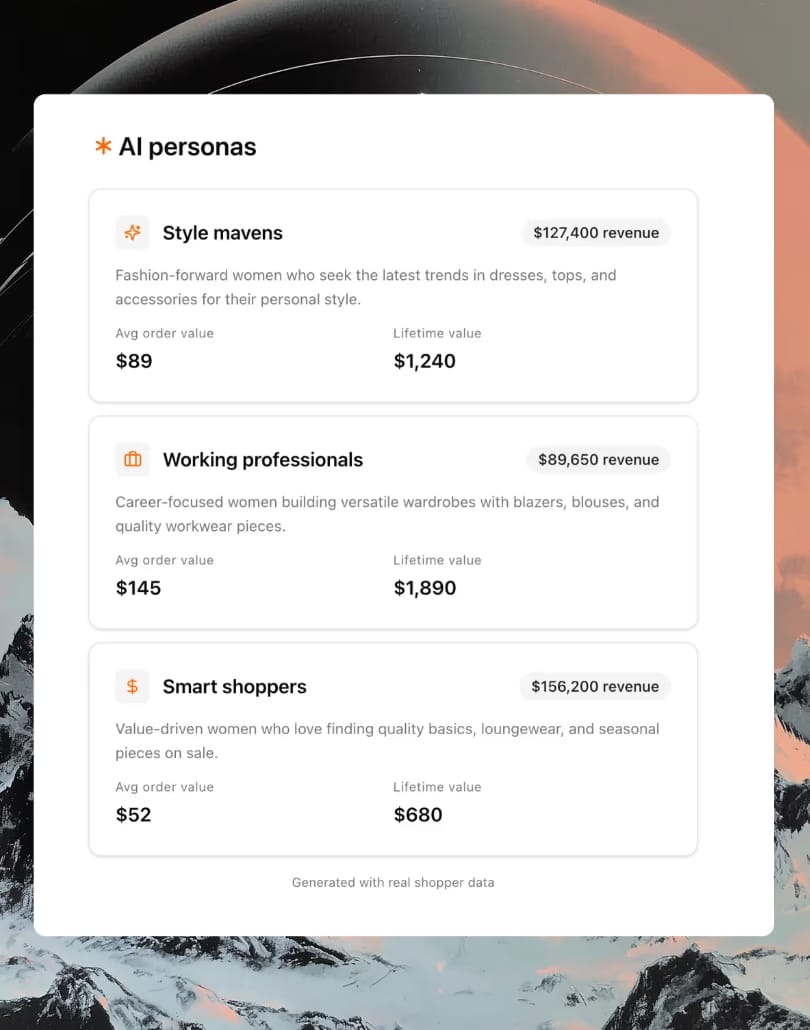
That second number is intriguing because it showcases the reality that, on average, each merchant has nearly 2.6 product brands supported by Redo.
In other words, Redo is not merely selling a single, narrow point solution. It is
— Cross-selling,
— Expanding product usage, and
— Trying to consolidate multiple pieces of eCommerce software into a single platform.
That is the deeper financial signal.
The AI eCommerce Claim
There's also an artificial intelligence layer to this announcement.
Redo says a key area of investment post-funding will be AI-driven eCommerce tools designed to support customer engagement throughout the shopping journey.
The company specifically says it is developing:
- Agentic shopping experiences tailored to each shopper on a site;
- A marketing agent to personalize each email and text for shopper conversion; and
- A post-purchase agentic concierge intended to increase customer lifetime value.
If, in fact, Redo is truly moving forward with Agentic AI offerings to help its clients, that is what is especially intriguing to me.
This suggests AI software that can independently:
🔺 Take action,
🔺 Guide a shopper,
🔺 Personalize a message, and/or
🔺 Move a customer toward a specific outcome.
Simply put, Redo's expanding AI stack is placing traditional eCommerce software under pressure from two directions at once, namely
ONE: Attacking single-purpose software tools that are too expensive; by
TWO: Developing automated AI offerings that are beginning to change how shoppers
▪️ Search,
▪️ Compare,
▪️ Ask questions,
▪️ Buy,
▪️ Return,
▪️ Exchange products, and
▪️ Interact with brands.
Redo’s bet appears to be this:
Brands need a new kind of eCommerce infrastructure to manage customer interactions.
That's the big opportunity, but also the big risk.
From my perspective, it seems to me that there are another dozen companies each day that announce they are building a new type of AI-enabled, digital infrastructure platform.
Yawn!
Personally, I believe that the real question is whether Redo can prove that its technology produces better merchant economics, not merely better marketing language.

That said, based upon what it has shared on its website and its social platforms, as well as in its funding announcement, it appears that Redo is on point with this journey.
In fact, Sterling Snow (Redo's CEO and Co-Founder) says in the release,
"When we started Redo, we thought we were solving returns. What we learned from thousands of brands is that returns were only one piece of a much larger challenge.
“Every merchant is fighting to own the relationship with their shoppers. This funding allows us to accelerate that mission and build the infrastructure brands need to create direct relationships with customers across every touchpoint."
A Valuation Worth Noting. Carefully.
The reported $1.25 billion valuation is the attention-getter in the lede paragraph of the release as it thrusts Redo into mythical "unicorn" territory of a $1 billion market cap or higher.
But Utah Money Watch readers should keep one caveat in mind, and that is what the $1.25 billion statement does not explain.
Is the valuation based on a pre- or post-money calculation?
Additionally, the company does not disclose:
- Revenue,
- Growth rate,
- Gross margin,
- Burn rate,
- Preferred-stock terms,
- Liquidation preferences, or
- Any valuation multiple.
Now ... does that make the announcement weak? No, of course not.
It simply means the unicorn valuation should be understood carefully.
The cleaner number is the amount raised: $81 million.
That's real growth capital, and it follows a $24 million Series A funding announced in August 2024 (as reported exclusively by TechBuzz News).
That Series A round was led by Pelion Venture Partners, with EPIC Ventures, Kickstart Fund, Tandem Venture Partners, Cervin Ventures and others participating.
In total, $105 million in venture funding is a meaningful amount of capital for a Utah company to raise in a sub-two-year window, especially in today's investing climate.
ReturnBear and the International Piece
One additional detail in the Series B announcement should not be missed.
Redo says it has already deployed a portion of its new capital to acquire ReturnBear, a provider of international returns, with fulfillment operations servicing more than 100 countries.
As noted in Redo’s February 2026 announcement, ReturnBear provides returns-management and reverse-logistics technology for brands selling internationally.
That acquisition fits the larger story.
If Redo is going to serve brands across the full post-purchase journey, then international returns are not a side issue. Instead, they are a major friction point.
Why? The reason is actually straightforward.
Although domestic product returns can be challenging, good luck trying to return a product across national borders without major headaches as doing so involves
— Variable shipping costs,
— Customs,
— Inspection,
— Refurbishment,
— Restocking, and
— Resale.
As such, product returns get more complicated once a customer, warehouse, and merchant are not in the same country.
In this regard, Redo’s acquisition of ReturnBear suggests that international expansion is not just a line in the Series B release.
The company has already started buying capability to support it, and that is worth watching.
The Shopify Footprint
Additionally, there's another practical proof point: Distribution.
In the Shopify App Store, the Redo listing shows a free plan, a 4.9 rating, and hundreds of positive reviews. {BTW: Shopify reports that Redo joined its App Store in May 2020, which means that (in reality), Redo was "in business" as of May 2020, at a minimum.*}
This app-store listing further describes Redo as a platform for
🔹 Premium returns,
🔹 Shipping and fulfillment,
🔹 Email marketing, and
🔹 Checkout.
That matters because Shopify is one of the primary operating systems for direct-to-consumer brands.
For a company like Redo, being deeply embedded in the Shopify ecosystem is not merely a channel detail. It can be
▪️ A customer-acquisition advantage,
▪️ An integration advantage and
▪️ A product-learning advantage.
It also reinforces why and how Redo can start with returns and then expand into adjacent merchant needs.
In other words,
- Returns create customer contact,
- Customer contact creates data,
- Data creates product opportunities, and
- Product opportunities create platform ambition.
And that reality appears to be the new Redo playbook.
What is Still Unknown
There are, however, important items Redo has not disclosed, such as:
- 2025 revenue,
- Annual recurring revenue (ARR),
- Profitability,
- Employee count,
- The exact amount paid for ReturnBear, and (as noted previously),
- Disclosing if the reported $1.25 billion valuation is pre-money or post-money.
To be clear, not addressing such questions is not unusual for a private, growth-stage company; but it is notable nonetheless.
During the past 40+ years, the Utah market has weathered enough technology cycles to know that valuation is not the same thing as durable enterprise value.
Specifically, a company can raise money at a high valuation and still struggle.
Conversely, a company can also raise money at a low valuation and yet use it to define a category.
The difference is execution.
So far Redo execution means proving it can do several things at once, like
- Continuing to win merchants through returns and post-purchase workflows;
- Expanding those merchants into multiple products;
- Proving its AI tools create measurable economic value;
- Integrating ReturnBear successfully;
- Delivering on its Utah hiring and wage commitments; and
- Growing internationally without turning operational complexity into margin pressure.
That's a serious agenda.
It is also why the $81 million matters.
The Utah Money Watch bottom line
To me, the Utah Money Watch read is straightforward.
Redo began with a specific merchant pain point: Product returns.
Now it is using that entry-point to pursue a larger AI-enabled eCommerce-technology platform opportunity.
And for its progress, the company has attracted
✅ A major Series B round,
✅ Retained existing investors,
✅ Brought in Smash Capital,
✅ Expanded by acquisition,
✅ Lowered its client cross-border return headaches and related-costs through its ReturnBear purchase,
✅ Tied itself publicly to a significant Utah jobs-and-wage commitment with the State of Utah, and has
✅ Become a venture-backed "unicorn" in the process.
That combination is what makes this a meaningful Utah capital-formation story.
And in my book, it also makes Redo one of the more interesting private technology companies to watch in the state right now.
Not because every reported unicorn valuation promises future success. They do not.
Rather, it's because Redo appears to sit at the intersection of several markets that are all moving and morphing at once:
▪️ eCommerce,
▪️ Artificial intelligence,
▪️ Customer support,
▪️ Product returns,
▪️ Logistics,
▪️ Merchant software, and
▪️ Direct-to-consumer brand economics.
That's a real money story.
And for Utah, it's a reminder that the next generation of local technology companies will likely not look exactly like the last generation.
Instead, some will be
— eCommerce infrastructure companies, while others will be
— Agentic AI services companies, while still others will be
— AI-empowered firms focused on vertical markets.
Then again, other firms will try to accomplish all three of the approaches noted above as parts of one enterprise.
From my perspective, that sounds like Redo.
Publisher's Note
This writeup was originally published and distributed to our Subscribers at approximately 11:40am MT on Thursday, 25 June 2026.
However, if this report/article came to your attention sometime after this date/time and you'd like to change that, then (to become a subscriber), please
1. Click on a "Subscribe" button on any Utah Money Watch webpage (visit www.UtahMoneyWatch.com),
2. Enter in your name in the proper field in the popup window that appears on-screen, and
3. Enter your preferred email address in the proper field too.
That's it. Thanks.
Team Utah Money Watch
Comments ()